When developing a mobile app, scalability is one of the most crucial aspects.
If you aim for long-term success, your app needs to handle increasing traffic, data, and users without losing performance. Below are the key factors to ensure your app scales seamlessly.
1. Start with Scalability in Mind
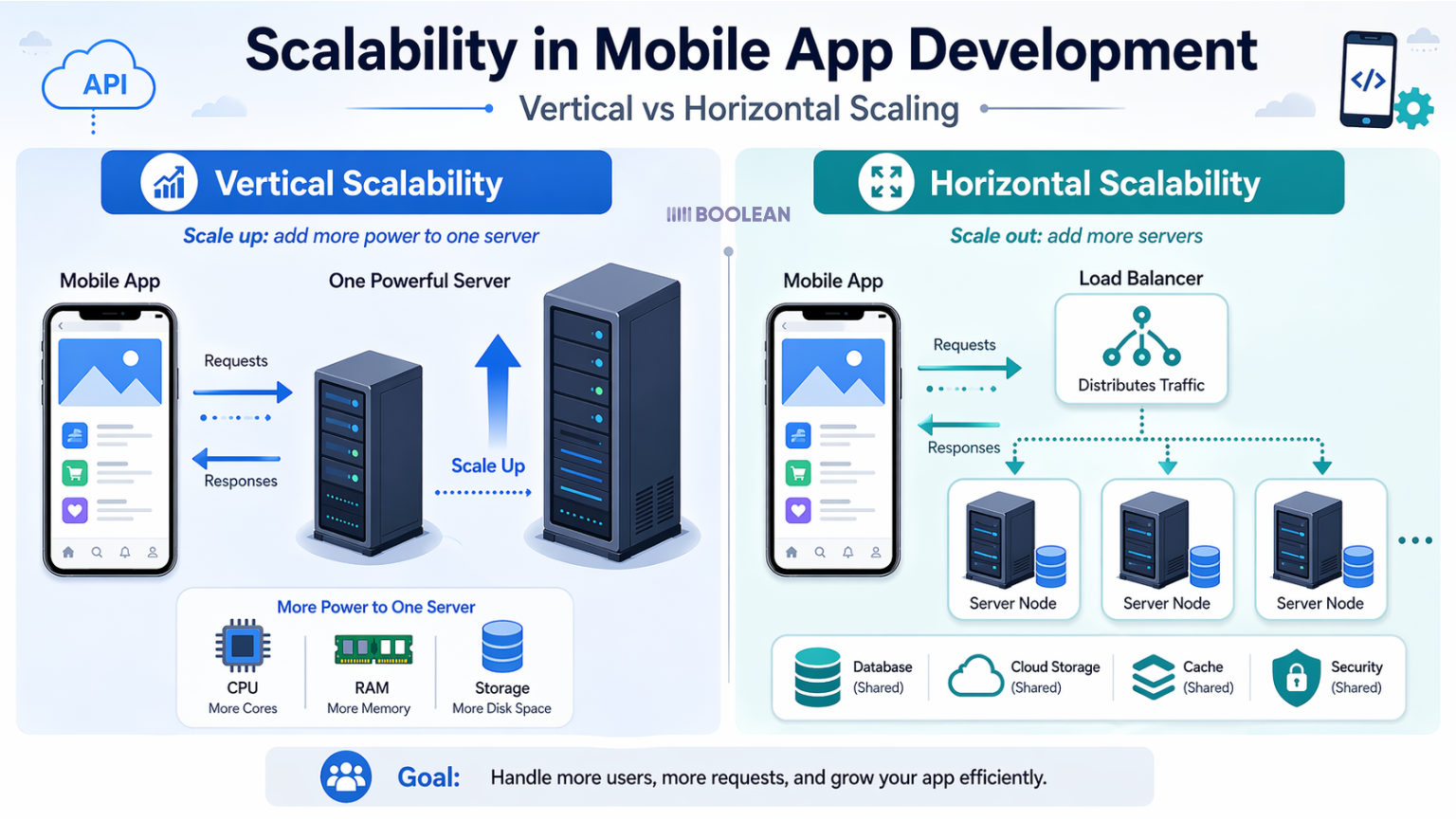
There are 2 types of scalability in mobile app development: vertical and horizontal. Bear with me while I am digging deep into both explaining every little detail.
Vertical scalability
Vertical scalability is like upgrading your computer to handle more tasks.
You add more CPU power, memory, or storage to your existing server.
Simple, right? It’s an easy fix for short-term needs. But there’s a catch.
Just like your trusty old laptop eventually reaches its upgrade limits, your server can only handle so much. Use this image for example.
It’s a great short-term solution, but in the long run, it can become costly and limited by the hardware’s upper limits.
Horizontal Scalability
Enter horizontal scalability, the more future-proof solution.
Rather than upgrading a single server, you add more servers to handle the load.
This means your native app can grow indefinitely or at least as long as you can afford new servers.
Let me explain: Instead of forcing one worker to carry more boxes and get the worker worn out, you hire more workers to split the load. Take an idea from this illustration below.
It becomes more efficient over time; when user demands explode, you don’t need to worry about word load.
If you didn’t know Apps like Instagram and Airbnb also use horizontal scalability.
Because of millions of users around the globe, they need an infrastructure that can grow as fast as their user base does.
When millions of users post photos or book accommodations simultaneously, more servers are added to distribute the workload.
No single server is forced to carry the entire burden, which means faster response times and happier users.
Horizontal scalability doesn’t just handle growth; it handles unpredictability. You can’t always predict when your app will go viral (though we’d all love to).
But when it does, horizontal scaling is your safety net.
Servers can be added dynamically, without requiring a complete architectural overhaul.
Why Horizontal Wins in the Long Run?
- Unlimited Growth Potential: You can keep adding servers as needed, without hitting a ceiling.
- Better Fault Tolerance: If one server crashes, others pick up the slack, meaning no single point of failure.
- Efficient Load Balancing: Traffic is evenly distributed, preventing any one server from becoming overloaded.
For businesses aiming for mass adoption or anticipating traffic spikes, horizontal scalability is the way to go. It provides flexibility, stability, and the capacity to grow alongside your user base.
2. Choose a Scalable Architecture
Your app’s architecture is a foundational decision. If it doesn’t scale, your app won’t either. Monolithic architectures, where the entire app runs on a single codebase, limit scalability.
This is where understanding mobile app architecture and mobile architecture becomes critical for Android and iOS app developer teams.
Microservices Architecture
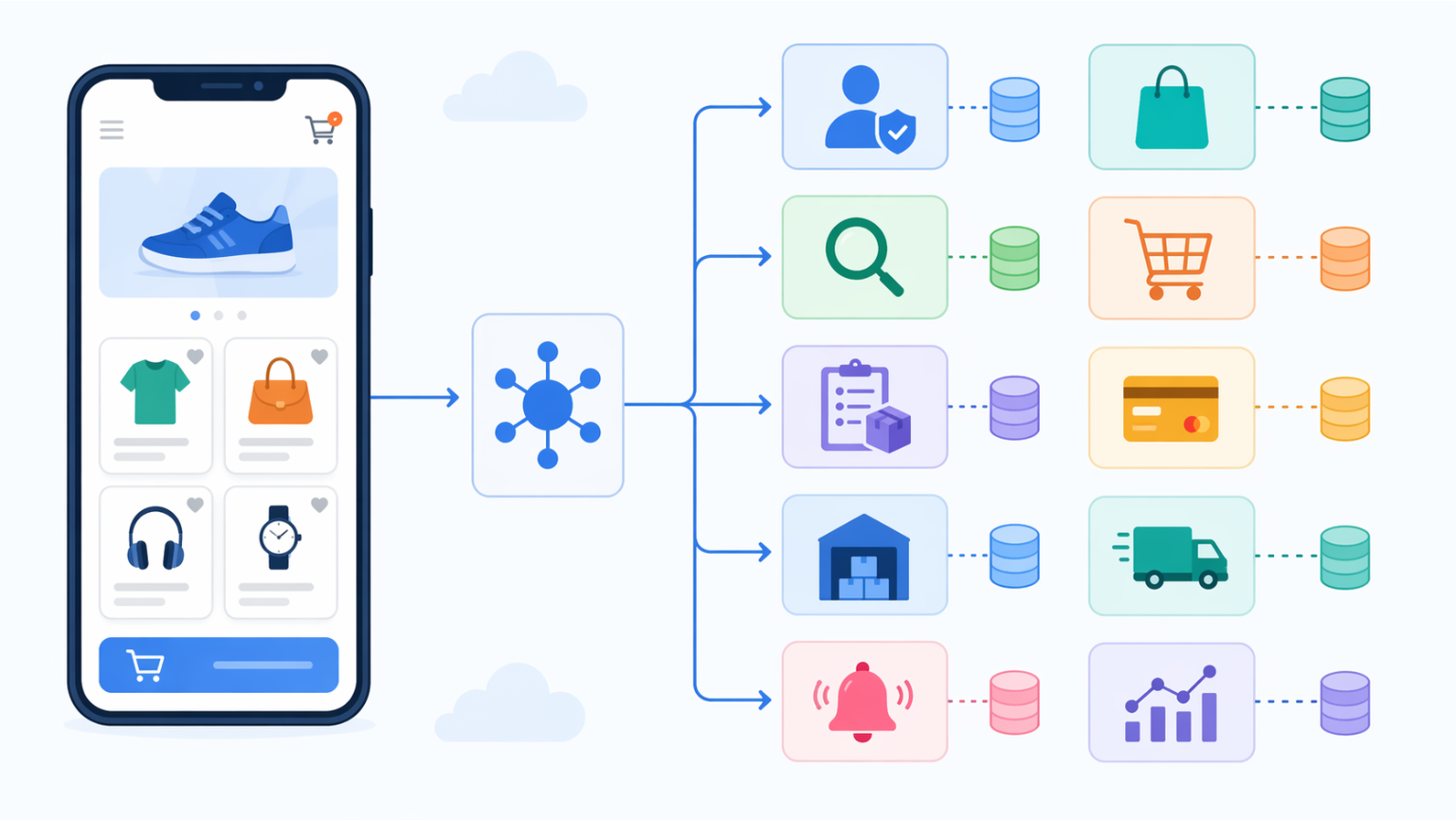
Microservices break down your app into smaller, independent services.
Each service handles a specific function (e.g., user authentication, payment processing).
These services run separately, so they can scale individually.
Here is an infographic of an e-commerce microservice architecture
Uber, for example, uses microservices to manage their ride-hailing services.
Each region’s ride data can be scaled independently, making Uber highly efficient even during peak times.
Similarly, logistics software development company teams and logistics applications benefit from this mobile application architecture approach.
Cloud-Based Solutions
Cloud platforms like AWS and Google Cloud offer auto-scaling services. At events like AWS Summit Washington DC 2024, industry leaders showcase how cloud application development and cloud based application development have revolutionized scalability.
These platforms automatically adjust server resources based on demand. Get an idea from this infographic.
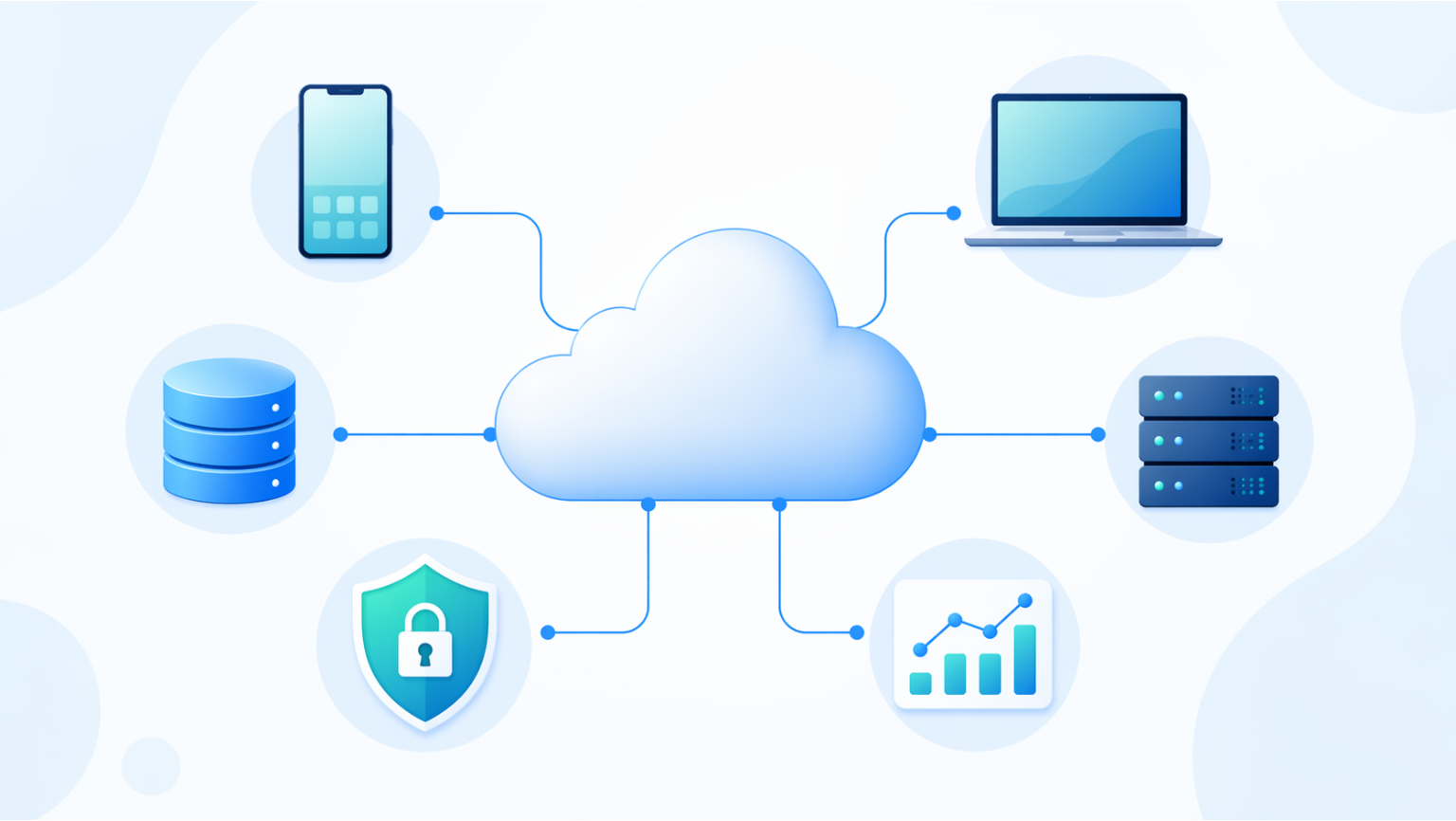
If user traffic spikes, your app can scale up instantly.
Plus point, with cloud-native solutions, you only pay for the resources you use.
This reduces upfront infrastructure costs while keeping your app flexible.
Building cloud applications through a cloud based application development company offering cloud app development services and developing cloud applications with expert cloud computing ensures your infrastructure can handle growth.
The sources of big data include user interactions, transaction logs, and real-time analytics that feed into these scalable solutions architecture.
3. Optimize Database Scalability
Your database for mobile app stores all the essential data your app needs to function.
As user activity increases, your database must handle more transactions and data without slowing down.
SQL vs. NoSQL Databases
Choosing between SQL and NoSQL databases is a critical decision.
- SQL (Structured Query Language): SQL databases like MySQL or PostgreSQL are highly structured. They’re ideal for apps that need strong data consistency (e.g., banking apps).
- NoSQL: NoSQL databases like MongoDB offer more flexibility. They’re better for unstructured data and can handle large-scale operations efficiently.
For clarity, see this graph. You will get a better understanding of SQL vs. NoSQL Databases.
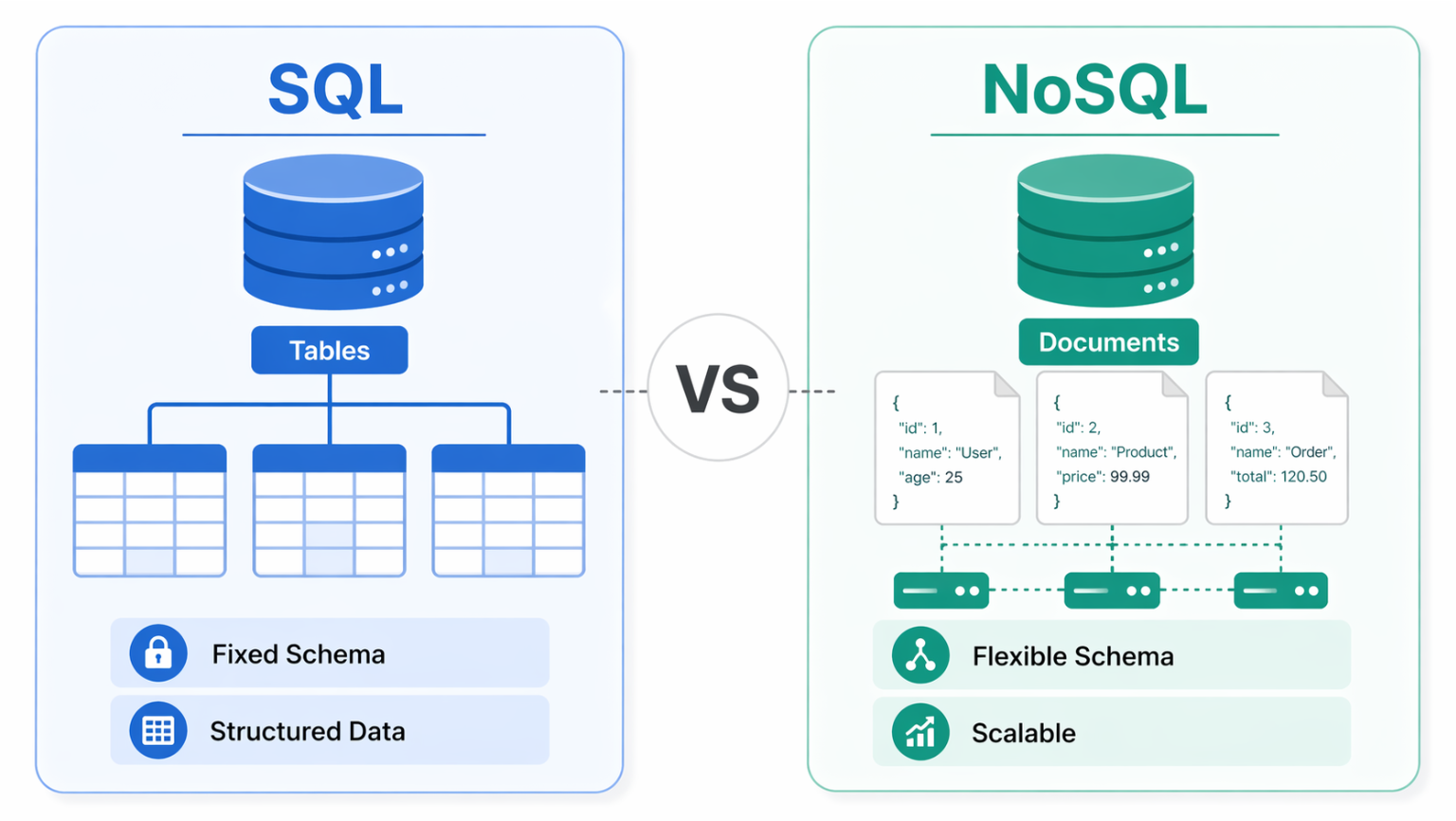
Many large-scale apps prefer NoSQL for its ability to grow without sacrificing performance.
Database Sharding
Sharding splits your database into smaller, more manageable pieces. You can get an exact idea in this image of database sharding.
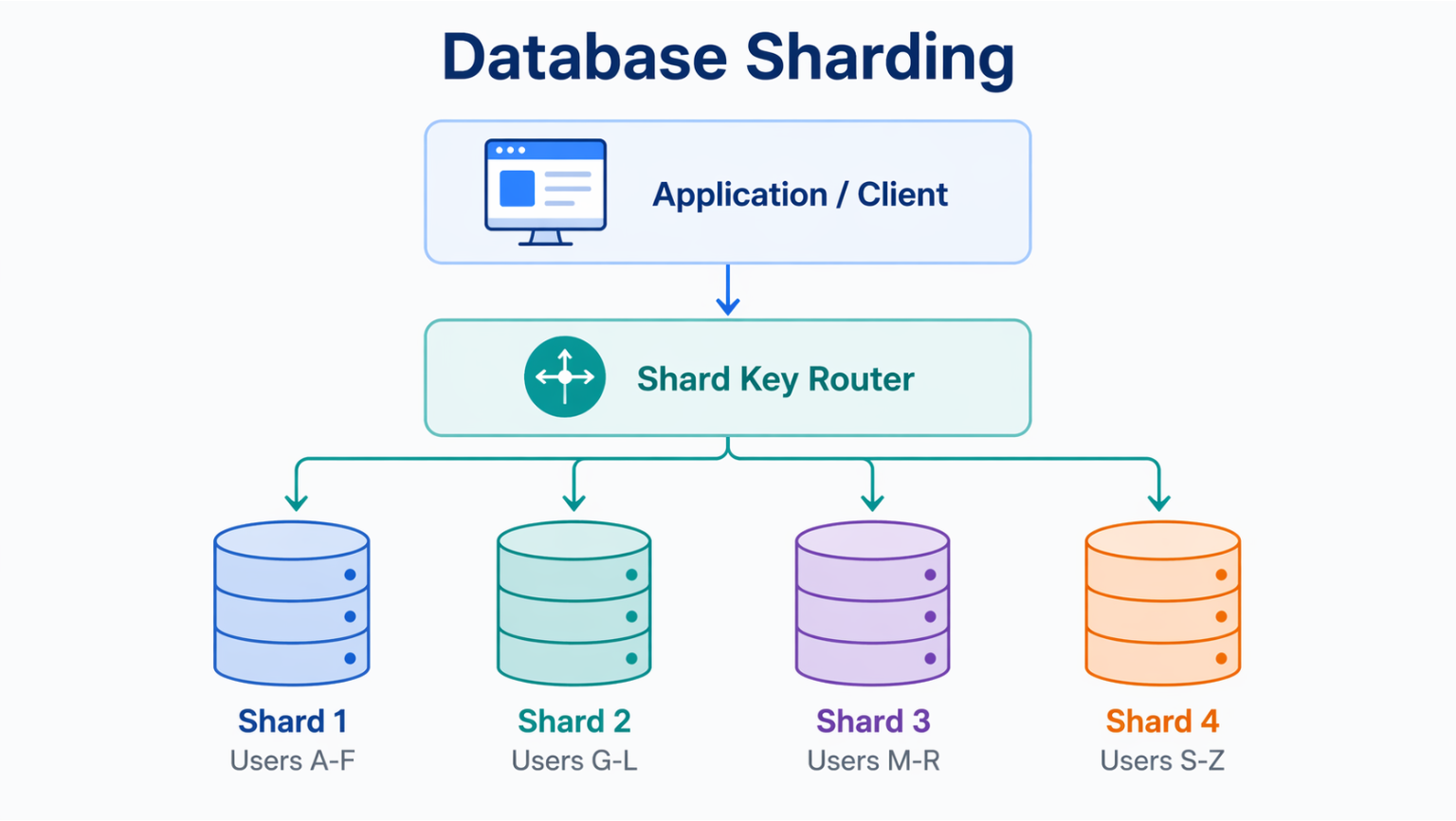
Each shard holds a portion of the data, and queries are distributed across multiple servers.
This reduces load and increases performance. Pagination on mobile also plays a crucial role in managing how data is displayed to users, ensuring smooth scrolling and better performance.
Imagine an e-commerce app.
When millions of users search for products, sharding ensures no single server is overwhelmed by the number of queries.
Caching Solutions
Caching is important for database optimization. Why it is important is illustrated in the image below.
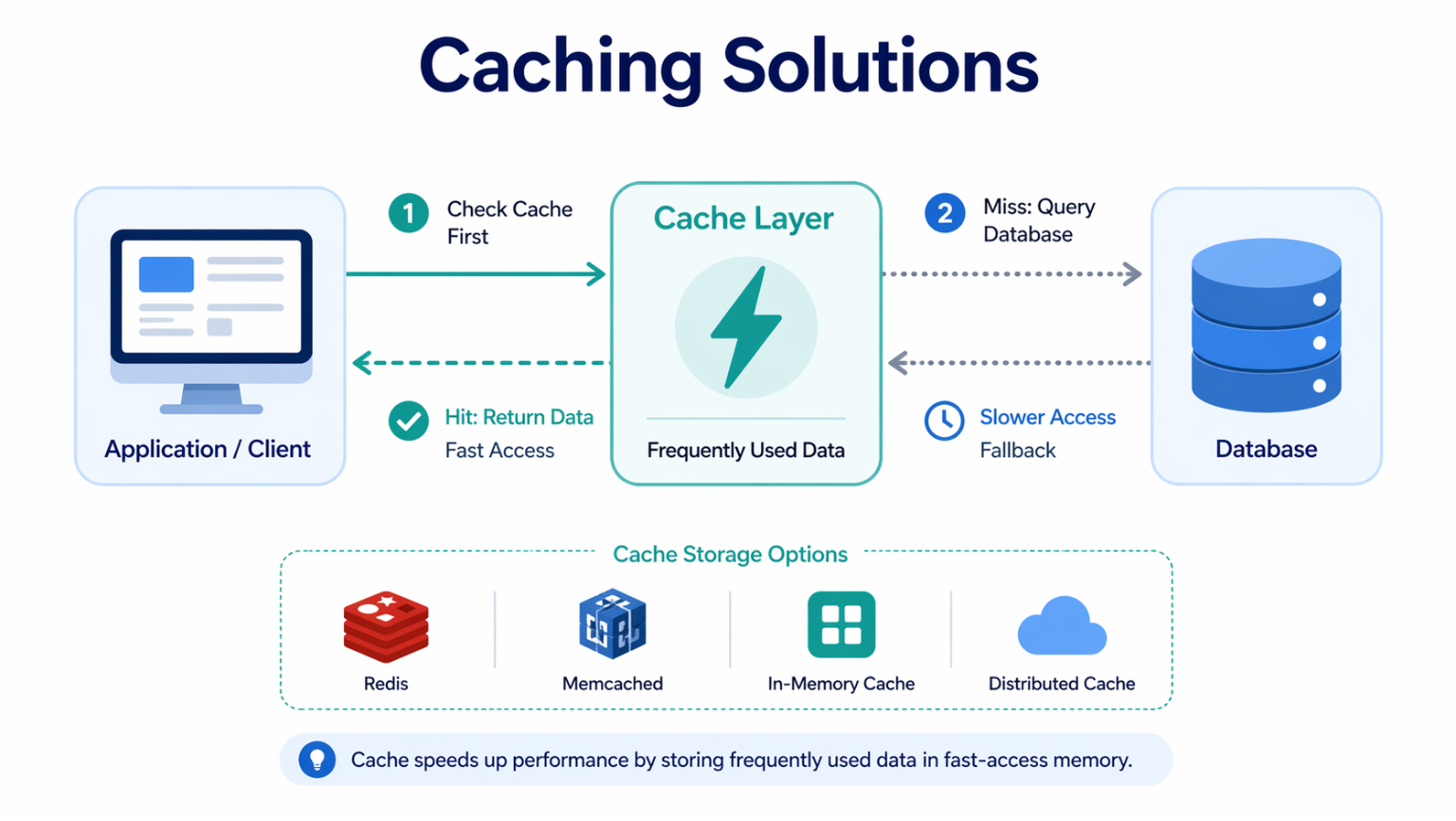
When users repeatedly access the same data, storing it temporarily makes better sense. This is especially important for apps like mobilexpression that collect user data, or when dealing with issues like why does my Pandora buffer so much – caching can significantly reduce buffering.
Redis and Memcached are popular caching tools that can significantly improve response times.
4. Prioritize Performance and User Experience
No matter how scalable your app is, performance matters. Users expect fast, smooth experiences. If your app becomes sluggish, they’ll leave no matter how many cool features you offer.
Understanding what percentage of web traffic is mobile (which now exceeds 60%) helps prioritize mobile optimization. This is crucial for maintaining strong app retention rate benchmarks and app retention benchmarks.
Load Balancing
Load balancing lets traffic be distributed evenly across all servers. When thousands of users access your app simultaneously, load balancers prevent any one server from getting overwhelmed.
This is how load balancers help to distribute the flow of heavy users smoothly.
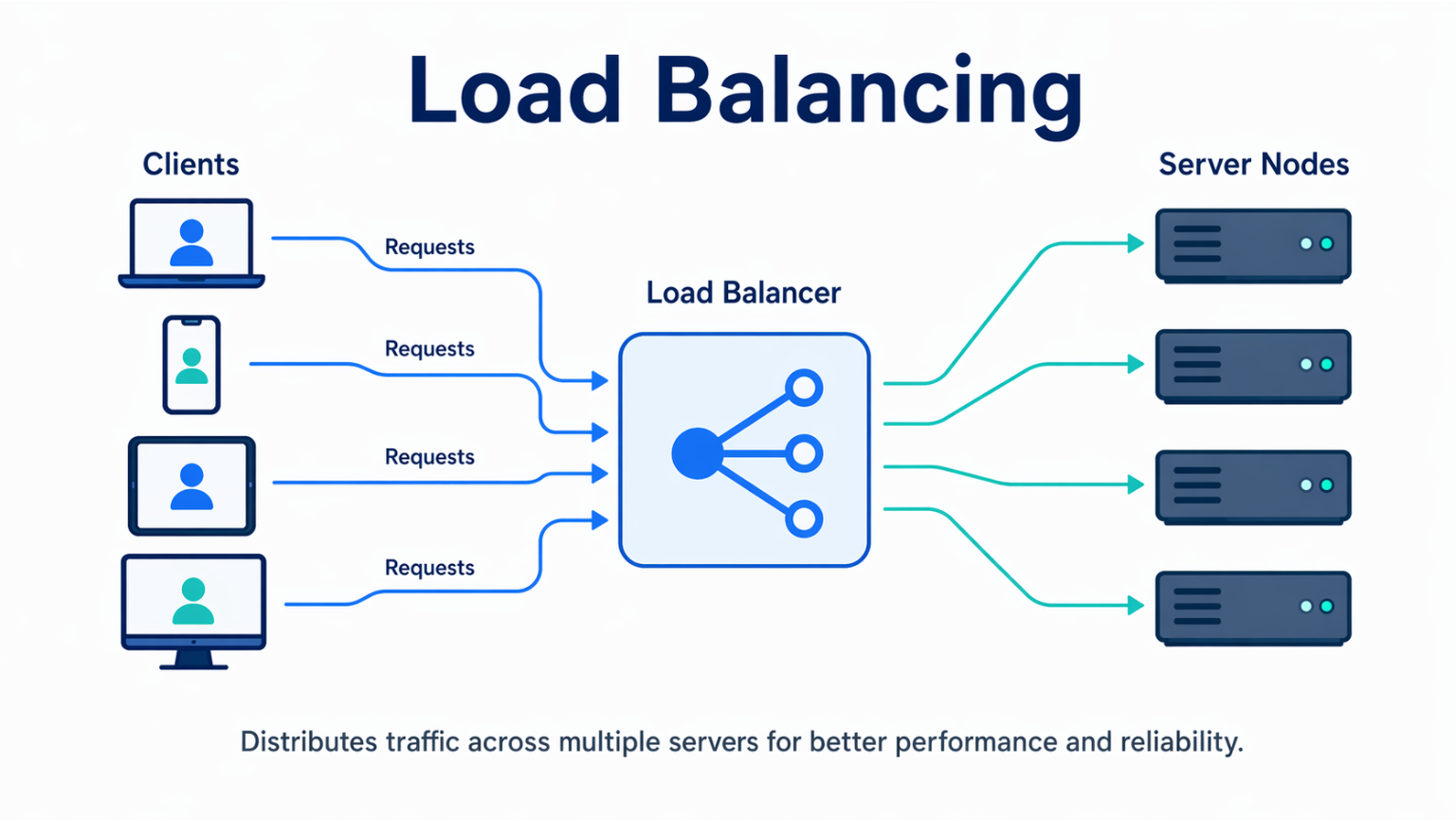
A real-world example is holiday shopping apps. During peak sales periods, traffic spikes. Load balancing keeps the servers stable, ensuring that users don’t experience slowdowns or timeouts.
Whether you’re running a good camera app for Android, a video call application for Android, or an app for business management, load balancing is essential.
Real-Time Performance Monitoring
It’s not enough to build a scalable app; you need to monitor it constantly.
Tools like New Relic and AppDynamics offer real-time insights into app performance.
They alert you to issues before they become problems. These are among the top 10 testing tools used by app developers in Atlanta GA, mobile app developers in Houston, and development teams worldwide.
5. Plan for User Growth
Your app will grow, and so will the data it generates. User data, transaction histories, and media files all take up space. You need a plan to manage this growth without hurting performance.
Whether you’re working on healthcare mobile app developers projects, real estate app development solutions, or a live streaming app development company, planning for growth is essential.
Modular Code Design
Modular code allows you to expand your app without major overhauls.
Each module or component is isolated, so you can scale individual parts of the app as needed.
For example, an app that handles user uploads might need to scale its media storage more than other parts of the app. With modular design, you only need to upgrade the relevant module without touching the rest of the app.
This approach is used by cross platform mobile app development companies and cross platform development services providers.
Elastic Features
Not all features need to scale at the same rate. Some application features might see heavy usage during certain times, while others remain dormant. Prioritize scaling features based on their demand.
Apps like Instagram allow certain features like live streaming or stories to scale during peak usage times. Other features can be deprioritized to maintain smooth performance.
This principle applies whether you’re developing a mobile check in app, secret text messaging apps for iPhone, or technology apps of any kind.
6. Security at Scale
As your app grows, so do security risks. More users, more data, more potential threats. Mobile apps security needs to scale alongside your app. Consider solutions like verizon security & privacy app as examples of robust security implementation.
Scalable Authentication
As you scale, your authentication systems should remain fast and secure. Protocols like OAuth 2.0 and JWT (JSON Web Tokens) offer scalable solutions for secure user authentication without compromising performance.
For example, apps like Slack and Twitter use OAuth to handle millions of users while keeping login times fast and secure. Whether users are on Android tec devices or iOS, scalable authentication is critical.
Data Encryption
Encryption isn’t just for sensitive apps. As user data grows, encryption ensures that all personal information is secure. Keep your encryption methods scalable to handle increased data volumes. This is particularly important for healthcare mobile app developers and financial apps.
Users often ask Mint app is it safe – strong encryption helps build that trust. Additionally, apps for protection of real estate agents require robust security measures.
7. Test for Scalability
Testing is critical for ensuring that your app performs under heavy loads. Scalability testing involves simulating user traffic to see how your app reacts under pressure.
Load Testing
Load testing measures how well your app performs under normal traffic. Use tools like JMeter or BlazeMeter to simulate thousands of users accessing your app simultaneously. These are among the top 10 testing tools recommended for comprehensive testing.
Stress Testing
Stress testing takes it a step further. It pushes your app beyond its normal operating limits to see how it behaves under extreme conditions.
This is essential for identifying bottlenecks and weak points in your app’s architecture. Whether you’re testing a smart watch app development project, wearable app development, or a support mobile app, stress testing reveals critical insights.
8. Future-Proofing with Emerging Technologies
The tech landscape is evolving rapidly, and your app needs to keep up. Emerging technologies offer new ways to enhance scalability and future-proof your app for long-term success. Staying updated with trends in software development is crucial.
AI and Machine Learning
AI can predict traffic spikes based on user behavior. By analyzing patterns in real time, AI can adjust resources dynamically, scaling your app as needed.
Machine learning models can also optimize app performance by learning which features users engage with most.
This technology is being adopted by cross platform mobile app development companies and specialist teams working on Flutter mobile app development services and Swift mobile app development.
Edge Computing
Edge computing reduces latency by processing data closer to users. Instead of relying solely on central servers, data is processed at the “edge” of the network.
This speeds up response times, especially for global users. This is particularly beneficial for location-based app services, IoT mobile app development, and mobile solutions Colorado providers serving distributed user bases.
5G Networks
With the rise of 5G, mobile apps can handle real-time data with minimal latency. This is especially important for apps that require fast responses, like gaming or financial apps.
When considering how to advertise a mobile game or advertising on mobile games, 5G capabilities can be a major selling point. The improved connectivity also benefits users of Android vs iOS equally, as both platforms support 5G technology.
App Maintenance and Support
Building a scalable app is just the beginning. Ongoing app maintenance services and mobile app maintenance are crucial for long-term success. Many businesses seek an application maintenance company or app maintenance services provider to ensure their apps remain updated and optimized.
The cost of maintaining an app varies based on complexity, but it’s essential for sustaining performance and app retention benchmarks.
Whether you need app for maintenance services, a support mobile app, or comprehensive mobile app maintenance services, partnering with the right team ensures your app continues to perform as it scales.
Platform-Specific Development Considerations
Different platforms require specialized expertise. If you’re looking for an Android programmer for hire or working with an iOS apps development company offering iOS mobile development, understanding platform-specific nuances is vital.
Go language Android development has gained traction for backend services, while Swift mobile app development remains the gold standard for iOS.
For those pursuing cross-platform strategies, Flutter mobile app development services enable you to build me an iPhone app and Android app simultaneously, reducing development time and costs.
Specialized App Development
Different industries have unique scalability requirements:
- Real Estate: An app for real estate or real estate app development solutions needs to handle property listings, virtual tours, and agent communications efficiently
- Healthcare: Healthcare mobile app developers must ensure HIPAA compliance while scaling
- Business Management: An app for business management requires robust data handling and user permissions
- Wearables: Smart watch app for Android and smart watch app development demand optimized performance for limited hardware
- Messaging: When considering how to develop a messaging app, end-to-end encryption and real-time delivery at scale are paramount
- Live Streaming: A live streaming app development company must handle bandwidth-intensive operations
- Transportation: Apps like the NYC public transport app, NYC subway directions app, and similar location-based app services require real-time data processing
Web and Unity Development
Beyond native mobile apps, web app development services, web application solutions, and website app development services also require scalability planning.
Unity application development for gaming apps demands special attention to performance optimization and resource management.
Additional Considerations
When developing widgets like a money widget for financial tracking, or safety features like the noonlight safety app, scalability must be balanced with functionality and user experience.
Understanding mobile apps and business integration helps create solutions that scale with enterprise needs.
If you’re working with cloud migration services companies, ensure they understand your app’s specific scalability requirements and can provide tailored scalable solutions architecture.
Conclusion
Scalability is the cornerstone of long-term app success. From infrastructure and architecture to database optimization and security, every aspect of your app must be designed to handle growth.
By planning for scalability from the outset, you ensure that your app can grow without compromising performance. Embrace cloud solutions, optimize your database, and keep an eye on performance. Future-proof your app with emerging technologies like AI and 5G.
With the right approach, your app won’t just survive, it’ll thrive as it scales.
1. How can I ensure my mobile app scales across different platforms?
To ensure cross-platform scalability, build your app using frameworks like React Native or Flutter that allow you to develop for both iOS and Android. Work with cross platform mobile app development companies offering cross platform development services to maximize efficiency.
Additionally, use APIs and cloud services that are platform-agnostic to handle scaling uniformly across devices. Understanding users of Android vs iOS demographics helps optimize for both platforms.
2. What role does caching play in mobile app scalability?
Caching helps reduce server load and speeds up content delivery by storing frequently accessed data locally on a user’s device.
This minimizes the need to fetch data from the server repeatedly, improving performance and ensuring scalability.
3. How do I maintain app security as I scale?
As your app scales, ensure secure scalability by implementing strong encryption, regular security audits, and automatic patching.
Use scalable security protocols, such as token-based authentication and API gateways, to protect user data even as your user base grows. Partnering with an ASO strategy services provider can also help optimize your app store presence while maintaining security standards.