
Introduction
In 2026, people do not just look for brands.
They experience them.
Your brand lives on phone screens, social platforms, and everyday moments. If people cannot see you easily they forget you just as fast. Attention is short. Choices are endless.
This makes brand presence more important than ever before.
A mobile app is no longer something only big companies use. It has quietly become a simple way to stay close to customers. It sits right on their phone. It opens with a tap. It reminds them you exist without asking for too much effort.
For beginners in business this matters a lot. A mobile app helps your brand feel real and reachable. It gives customers one place to connect, explore and engage with you. No confusion. No noise.
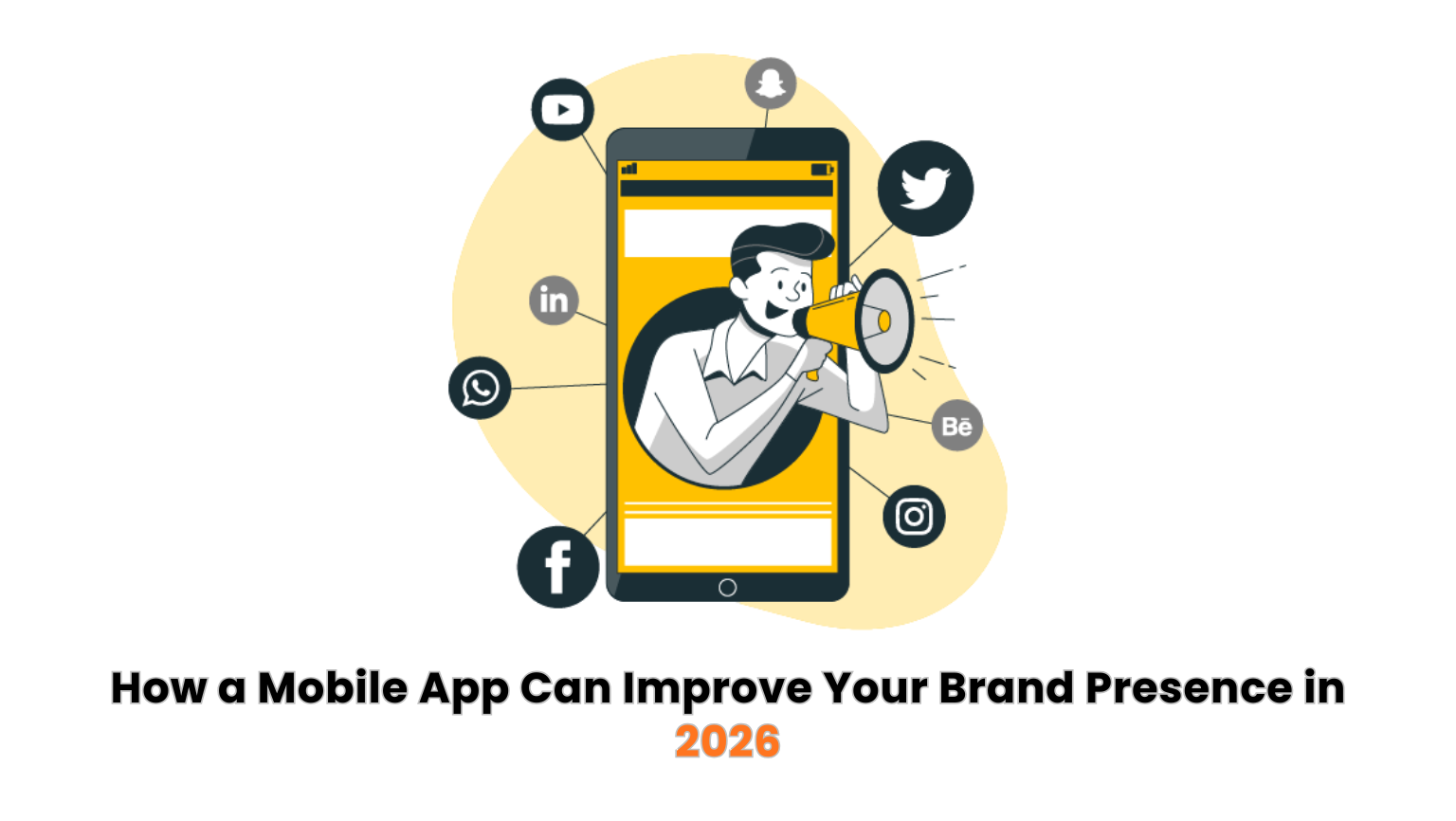
As we move deeper into 2026, brands that stay visible build trust faster. Brands that feel familiar win attention. A mobile app can play a key role in making that happen.
What Brand Presence Really Means for Modern Businesses
Brand presence is not just about having a logo or a name people recognize.
It is about how often people see you and how they feel when they do.
For modern businesses, brand presence means being easy to find. It means showing up at the right time in the right place. Most of the time that place is a mobile phone.
Strong brand presence helps people remember you without trying. It builds comfort. It builds trust. Over time it turns interest into loyalty.
Here is what brand presence looks like today:
- Customers recognize your brand quickly
- Your business feels familiar and reliable
- People know where to reach you
- Your message feels clear and consistent
Without a strong presence, even good brands get overlooked. With the right tools, your brand stays visible and relevant. A mobile app helps make that visibility feel natural not forced.
This is why many businesses now see brand presence as an experience not just promotion.
Why Mobile Apps Are Becoming a Branding Essential
Mobile apps have slowly moved from being optional to being important.
In 2026, people expect brands to be easy to access. They want quick answers. They want smooth experiences.
A mobile app gives your brand a permanent space on the customer’s phone. That space builds familiarity. Familiarity builds trust.
Instead of asking people to search for you again and again, a mobile app keeps your brand close. One tap is enough.
Here is why mobile apps are becoming essential for branding:
- Your brand stays visible every day
- Customers interact with you more often
- Communication feels direct and personal
- Your brand experience stays consistent
To understand this better look at the comparison below.
| Without a Mobile App | With a Mobile App |
|---|---|
| Customers must search for your brand | Your brand is always on their phone |
| Limited interaction | Regular engagement |
| Brand feels distant | Brand feels closer |
| Easy to forget | Easy to remember |
Mobile apps also support long term brand growth. They create a space where customers feel connected. Not rushed. Not distracted.
In a mobile first world brands that simplify access stand out naturally. A mobile app helps you do exactly that.
Choosing the right tech stack ensures your app performs smoothly and reflects your brand’s quality consistently.
How a Mobile App Helps Your Brand Stay Visible Every Day
Visibility is not about shouting louder.
It is about showing up naturally.
A mobile app keeps your brand in front of customers without demanding attention. Your app icon sits on their phone screen. Even when they do not open it your brand stays in mind.
Small moments matter. A quick glance. A familiar logo. A simple notification. These moments build recognition over time.
Here is how a mobile app helps with daily visibility:
- Your brand appears on the phone screen regularly
- Customers open your app when they need something
- Messages reach people directly
- Your brand feels like part of their routine
Daily visibility creates comfort. Comfort creates trust. Trust turns into loyalty.
Unlike other channels a mobile app is personal. It belongs to the customer. When your brand earns that space it becomes harder to ignore and easier to remember.
In 2026, brands that stay visible without being annoying are the ones people stick with.
Optimizing your app for the app store increases visibility, helping your brand reach more customers naturally.
Building Stronger Customer Relationships Through a Mobile App
Strong brands are built on relationships.
Not on one time visits.
A mobile app gives your brand a calm and steady way to stay connected with customers. It does not interrupt. It waits patiently.
Customers open it when they want. That simple control makes the relationship feel respectful.
Below are a few important ways a mobile app helps deepen customer relationships.
Direct and Comfortable Communication
A mobile app allows your brand to speak directly to customers without feeling intrusive. Messages feel more personal. Updates feel relevant.
- Customers receive updates in one place
- Messages feel clear and focused
- Communication feels natural not forced
| Traditional Communication | Mobile App Communication |
|---|---|
| Easy to ignore | Harder to miss |
| Often feels crowded | Feels personal |
| Limited connection | Ongoing interaction |
Creating a Sense of Belonging
When customers use your mobile app they feel part of your brand. It feels like a private space made just for them.
This sense of belonging helps customers stay longer and engage more.
- Customers feel valued
- Brand feels welcoming
- Interaction feels familiar
| Without an App | With an App |
|---|---|
| One time visits | Ongoing connection |
| Weak emotional bond | Stronger brand attachment |
| Low engagement | Higher engagement |
AI-powered features in mobile apps help personalize experiences and make interactions with your brand feel smarter and more engaging.
Understanding Customer Needs Better
A mobile app quietly shows you what customers care about. What they open. What they use. What they ignore.
This helps your brand improve naturally over time.
- You learn what customers prefer
- You improve experiences step by step
- Customers feel understood
When customers feel understood they stay loyal. They trust your brand more.
Turning Small Interactions Into Long Term Trust
Trust does not happen overnight.
It grows through small positive moments.
Each time a customer opens your app and finds value trust grows a little more. Over time that trust becomes a strong relationship.
In 2026, brands that focus on steady connections instead of quick attention are the ones people remember. A mobile app makes those steady connections possible.
Custom mobile apps allow businesses to streamline interactions and create meaningful connections with customers every day.
Creating a Consistent Brand Experience in One Place
Consider how people perceive your brand today.
They might find you on social media. They might see an ad. They might type your website address. They might walk into your store.
If every touch feels a bit different, it creates tiny moments of doubt.
Is this the same brand? Can I trust it? Do they really know who I am?
A mobile app provides a single, unified space where all aspects of your brand can be aligned.
Same look. Same tone. Same promises. Every single time a person opens it.
Why consistency inside your app matters
When your brand feels the same in every visit three things happen
- People remember you faster
- They feel safer when they buy
- They spend less time figuring out what to do
Your app becomes a kind of “home base” for your brand.
You control the space instead of fighting for attention on a busy social feed or a search page full of other names.
What a consistent brand experience looks like in an app
Inside your mobile app you can keep these key parts of your brand steady
- Visual style
- Same logo in the same place
- Brand colors on buttons and backgrounds
- Simple fonts that match your website and store
- Voice and tone
- The way you speak to customers matches your emails and posts
- Clear friendly words on buttons and menus
- Helpful tips not heavy sales talk on every screen
- Offers and rewards
- Prices and deals match what people see elsewhere
- One single loyalty program instead of many small ones
- Points and rewards that follow the customer across all visits
- Service and support
- One simple Help or Support area
- Answers written in the same style as your brand
- Easy ways to contact you without leaving the app
When all of these stay in line your app starts to “feel” like your brand even before someone reads the text.
Understanding mobile app UX psychology helps your brand design experiences that feel familiar and keep users coming back.
A quick picture: scattered brand vs one strong place
| Without a mobile app | With a mobile app as your brand home |
|---|---|
| Logo style changes from one channel to another | Logo and colors stay the same on every app screen |
| Different offers in store and online | One clear set of offers inside the app |
| Mixed tones in posts emails and ads | One voice for tips news and support |
| Customers repeat their details many times | Profile and preferences saved in one secure account |
| People forget you between visits | App icon stays on their phone as a daily reminder |
Turning your app into a “single source of truth”
Your mobile app can act as the one place where everything about your brand comes together
- Your story
- Your products
- Your support
- Your rewards
You can link to it from your social pages.
You can place QR codes in your shop that open it.
You can point to it in emails as the easiest way to manage orders or bookings.
Soon, customers learn a simple rule
“If I need anything from this brand, I open their app.”
That feeling is powerful.
It cuts confusion.
It saves time for them and it builds real trust for you.
How Mobile Apps Increase Customer Trust and Brand Credibility
Trust does not appear in one big moment. It builds slowly in many small ones.
Each time a customer opens your mobile app and it works well, they feel a little safer with your brand. Each time they get a clear answer to a question, they feel a little more respect.
Over time, those small moments turn into strong brand credibility.
Trust starts with feeling safe
People care a lot about safety on their phones. Money. Personal details. Private messages.
A good mobile app can send strong trust signals
- Secure sign in
- Simple login with options like one time codes
- Clear messages that explain how you protect data
- Safe payments
- Trusted payment methods that people already know
- Payment screens that feel clean and professional
- Privacy made clear
- Short, easy to read privacy notes, not long scary pages
- Simple settings where people can choose what to share
When customers can see that you respect their data they are far more likely to trust your brand with their money.
Always there always reachable
Trust grows when people know they can reach you. Not just once. Again and again.
Your app can act as a direct line
- A clear Help or Support button on every main screen
- In app chat or a simple contact form
- Quick access to order history bookings or past tickets
Customers do not need to search for your phone number on the web.
They do not need to scroll through social feeds to send a message.
They know this one thing
“If I have a problem I open the app.”
That feeling makes your brand look steady and serious.
Clear, honest information in one place
Nothing kills trust faster than mixed information.
One price on the website. A different one in store. Another one in an ad.
With a mobile app, you can keep
- Current prices
- Live stock or availability
- Order status updates
- Return or cancel rules
all in one place.
When people see the same clear facts every time doubt begins to fade.
They feel your brand is honest because they are never surprised by hidden rules.
Reviews, ratings and real proof inside your app
People trust other people more than they trust brands.
So social proof matters.
Your app can show
- Product ratings from other buyers
- Short reviews with real names or initials
- Photos from real customers
- Badges like “most popular” or “top choice” based on real data
You can also share simple trust marks
- Years in business
- Number of active users
- Awards or press mentions
This gives a quiet message
“Others trust us. You can too.”
Personal service without being pushy
A mobile app lets you talk to each person in a more personal way.
Done right this also builds trust.
- Show offers based on what they really like not random deals
- Remind them about orders or bookings in a helpful tone
- Send alerts only when there is real value not every hour
Customers start to feel
“This brand understands me. They respect my time.”
When people feel respected they trust your brand more and they stay longer.
Reliability and a smooth experience build quite a trust
Trust is not only about big promises.
It is also about your app just working.
- Screens load fast without freezing
- Buttons do what they say
- The design feels stable, not changing every week
- The app remembers basic details like address and preferences
These things may seem small, but together they say
“We are careful. We test our stuff. We value your time.”
That is pure brand credibility in daily life.
Low trust vs high trust with a mobile app
| Low trust brand experience | High trust brand with a strong mobile app |
|---|---|
| Prices change from channel to channel | Prices and offers match in store website and app |
| Hard to contact support | Clear contact and support options right inside the app |
| Slow or broken mobile site | Smooth fast app with simple menus and clear next steps |
| No sign of other happy customers | Ratings reviews and real usage numbers visible in the app |
| Vague rules about returns and refunds | Easy to find policies written in plain language in one place |
Reaching Your Audience Directly Without Extra Effort
You know how hard it is to get seen on social media now. You post. You wait. The algorithm decides who sees it.
Email is not easy either. Inboxes fill up. People swipe delete in seconds.
Your mobile app skips that crowd. It gives you a direct line to your audience on a device they carry all day.
Your app sits where attention already lives
Your customers may not visit your website every day
They may not open every email
They may miss your posts in a busy feed
Yet they unlock their phone again and again.
When your app lives on that home screen your brand is never far away
- One tap to see what is new
- One tap to check an order or booking
- One tap to contact you
No extra effort from them. Very little extra effort from you once the right flows are in place.
Gaining your first app users is crucial to building brand recognition and establishing daily touchpoints with customers
Direct messages without middlemen
With a mobile app you can talk to your audience without going through
- Social networks
- Search engines
- Third party platforms
Instead you can use
- Push notifications
- Short alerts that appear on the lock screen
- New offers updates or reminders
- Quick nudges that bring people back to your brand
- In app messages
- Banners or pop ups that show when someone is already inside the app
- Perfect for tips how to use features or highlight new products
- News or updates section
- A simple space inside the app where people can see the latest in one place
This turns your app into your own direct communication channel. You speak. Your audience hears you. No gatekeeper in the middle.
The trick is to stay helpful, not noisy
Reach is good. Spam is not.
To keep trust high use your direct access in a smart way
- Send fewer but more meaningful notifications
- Share real value not just “buy now” messages
- Allow people to choose what type of alerts they want
- Make it easy to pause or turn off alerts
When people feel in control they stay open to hearing from you. They do not mute your app; they keep it.
Simple ways to use your app for direct reach
Here are clear ideas that work for many brands
- Send a welcome message when someone installs the app
- Share a small reward for first use
- Remind customers when their points or rewards are close to a bonus
- Let people know when an order ships or a booking changes
- Share early access to sales just for app users
- Send location based offers when they are near your store or event
In short your app becomes your main stage. You do not wait for people to find you in a crowd. You step in front of your own audience with ease.
Staying Ahead of Competitors in the Mobile First Era
By 2026, your customers expect brands to be easy to reach on their phones
Not “nice to have” easy
More like “basic requirement”, easy.
If your competitors lean into this shift and you do not they look sharper
If you lean in first, you set the pace.
A mobile app shows you take your brand seriously
A smooth mobile app sends a clear message
- This brand invests in the customer experience
- This brand plans to be around for a long time
- This brand understands how people live today
When a customer compares two similar brands
- One has only a website and scattered social pages
- One has a clean app plus other channels
The second one often feels more modern and more reliable
Even if the products look the same.
Small advantages add up fast
Your app can help you stay ahead in many quiet ways
- Faster service
- Customers can order book or re order in a few taps
- No need to call, wait on hold or fill out long forms
- Better loyalty programs
- Points and rewards update in real time
- People see progress which gives them reasons to return
- Personal offers
- Deals based on real interests instead of random discounts
- Feels smart and respectful instead of loud and pushy
- Instant feedback
- Quick polls ratings or short forms inside the app
- You learn what works faster than a rival who waits for long surveys
These are not huge flashy moves Yet together they create a gap your competitors will find hard to close.
The mobile first world is already here
Most people now reach for their phone first
- To search
- To shop
- To compare brands
- To ask questions
If a rival gives them a simple app that answers those needs quickly you might never see that person on your website.
With your own app you stay in the race
- You are present in app stores where people search
- You have an icon on the home screen next to other trusted brands
- You become part of their daily phone routine
That is what staying ahead looks like in a mobile first era.
Is a Mobile App the Right Step for Your Brand in 2026
Not every brand needs a mobile app right now. Yet many more will need one by 2026.
Instead of asking “Does everyone have an app” ask a better question
“Does an app make real sense for my customers and my goals.”
Start with your customers’ daily habits
Think about how people already interact with your brand
- Do they buy or book from you often
- Do they return again and again
- Do they ask for updates on orders or services
- Do they join your events programs or classes
- Do they collect points or use discount cards
If the answer is “yes” to several of these then an app can make their life easier
It gathers all their actions in one simple place.
If they only buy from you once a year it might be too early
In that case, a strong mobile friendly website may be enough for now.
Tracking app performance and ROI ensures your mobile app is effectively boosting brand presence and engagement.
Questions to help you decide
Use these quick checks
- Do you need a direct line to your audience
- You want to reach people without relying only on social media or ads
- Do you offer services that people repeat often
- Food orders, gym visits, salon bookings, classes, deliveries, memberships
- Can an app save time for your team
- Fewer support calls because answers live in the app
- Self service options for changes cancellations or updates
- Do you have a plan to keep content fresh
- New offers news or features at least a few times a year
If most answers lean toward “yes” a mobile app is worth serious thought
It can move from “extra tool” to “core part of your brand”.
Be honest about your readiness
A mobile app is not only a launch moment
It is a living part of your brand.
Ask yourself
- Do we have basic time and budget to keep the app updated
- Can we reply to support messages that come through the app
- Are our prices stock and rules clear and stable enough to show there
- Do we have someone who can own the app experience inside the business
You do not need a big team yet you do need focus.
A half forgotten app can hurt your image more than none at all.
When waiting is the smart choice
Sometimes the best move is to prepare first
- Improve your mobile website so it is fast and simple
- Get your brand style voice and offers clear and consistent
- Learn more about what customers really want through surveys or polls
- Build an email list or loyalty program so you already have an engaged base
Then when you launch an app you can plug into all of that. You start strong instead of guessing.
Conclusion
A mobile app is more than a piece of tech on a phone It can become the main stage for your brand.
With the right focus it helps you
- Stay visible every day on the device people use most
- Offer one consistent experience that feels like “you” on every screen
- Build trust through safety clear information and reliable service
- Reach your audience directly without fighting for space in busy feeds
- Stay ahead of rivals who still treat mobile as an afterthought
Think of your app as a living part of your brand
The most powerful apps share a few simple traits
- They solve real problems for customers
- They are easy to use on the first try
- They match the brand look and voice people already know
- They keep improving based on real feedback
You do not need every fancy feature on day one. You only need a clear promise
“This app makes it easier to connect with our brand and get what you need.”
Your next steps from idea to asset
If you decide a mobile app feels right for your brand in 2026
- Write down the top three things your customers should be able to do in the app
- List the ways the app will make life easier for your team
- Sketch a simple flow from first open to first success for the user
- Plan how you will invite people to download and try it
- Decide how you will collect feedback and improve after launch
Treat your app like you treat your store, your website or your best product
Give it care, clarity and a clear role in your brand story.
Do that, and your mobile app will not just exist on a phone
It will work as a strong brand asset that grows trust, loyalty and presence long after 2026.
FAQs
- Why does my brand need a mobile app in 2026?
A mobile app keeps your brand visible, builds trust, and connects with customers daily.
- How can a mobile app improve customer engagement?
It allows direct communication, personalized offers, and easy interaction with your brand.
- Will a mobile app help my brand grow faster?
Yes, it strengthens brand recognition, loyalty and creates consistent experiences for customers.
- Can small businesses benefit from a mobile app?
Absolutely, even small brands can increase visibility and stay connected with customers easily.
- What features make a mobile app effective for branding?
Clear branding, easy navigation, personalized content, and regular updates make apps powerful tools.