Introduction
Hey there, future app creator!
If you’re reading this, chances are you have an amazing app idea that could change the game.
Maybe you’ve been sketching it out on napkins, discussing it with friends, or lying awake at night thinking about all the possibilities.
That’s exciting! But here’s where most first-time founders hit a wall choosing the right tech stack software development for their startup.
Think of your technology stack as the foundation of your digital product, just like bricks, cement, and design shape a building.
The right tech stack software development plan helps startups create fast, secure, and scalable apps without wasting time or money.
And the timing couldn’t be better. The global startup landscape is booming!
According to recent market research, the Global Startup Accelerator Market is expected to grow from $5.02 billion in 2024 to around $163.3 billion by 2034, with an annual growth rate of 8.20% between 2025 and 2034.
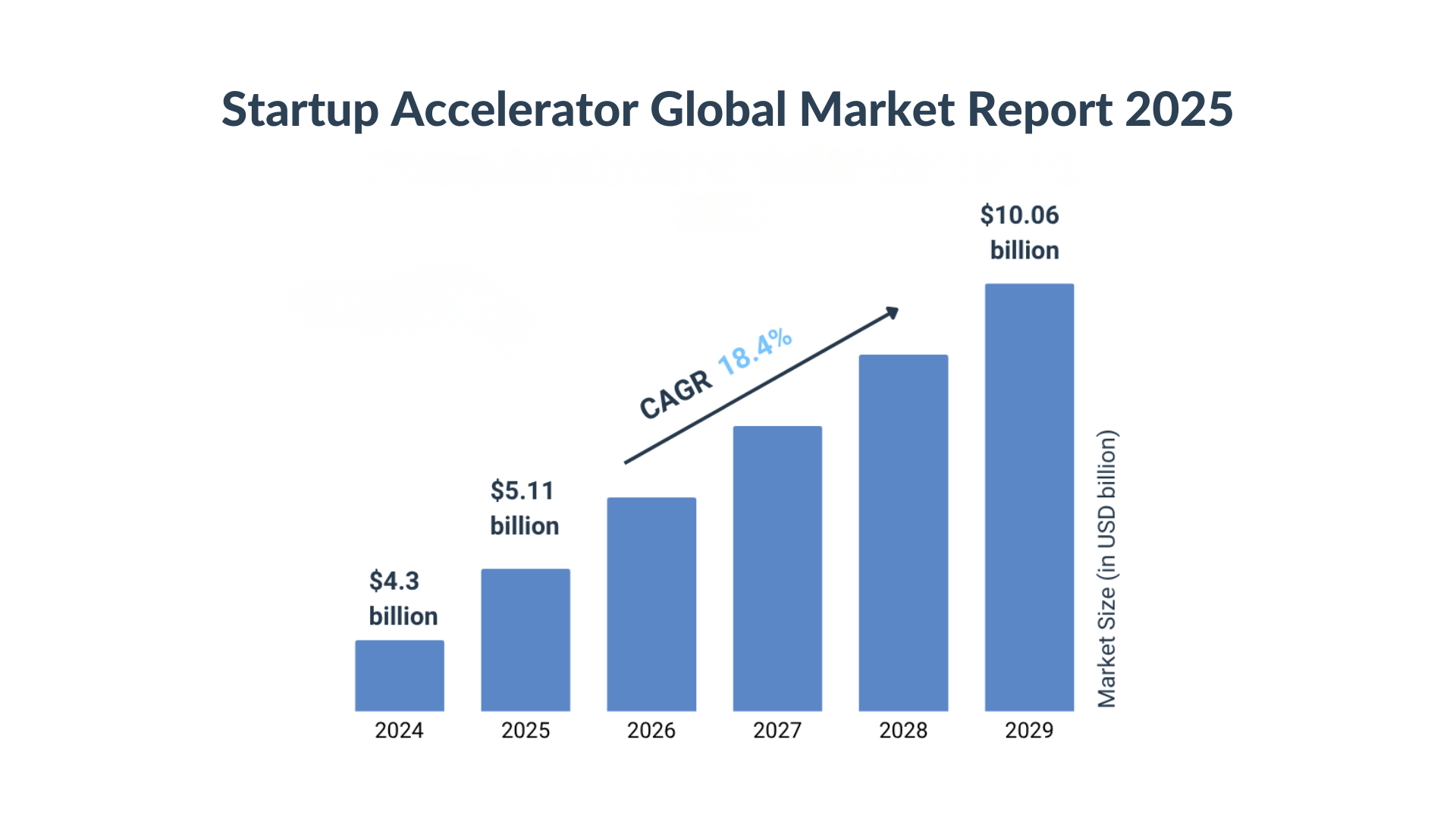
Such a huge expansion means more entrepreneurs, more revolutionary apps, and a strong request for dependable software development tech stacks to materialize the ideas.
Whether you’re partnering with a top mobile app development company USA or planning to build your own app, understanding what a tech stack means and how to choose the best one will set your startup up for long-term success.
In this guide, we’ll break down the best tech stack for startup app development in 2026, explain what a software developer tech stack really is, and show simple examples of how today’s most successful companies pick their tools.
By the end, you’ll clearly know which development tech stack fits your goals, even if you’re a beginner.
What Is a Tech Stack?
If this is your first time to build an app and you hear terms such as tech stack, software stack, or technology stack, you may be wondering what they actually mean.
Take it easy, it’s not as complicated as it sounds.
A tech stack refers to the combination of tools and technologies utilized to develop software.
You can consider it as the recipe for your app. Similarly, when you cook, you need ingredients, and an app also requires digital ingredients, such as programming languages, frameworks, databases, and hosting services.
All these combined become your stack for software development.
A Simple Analogy
Imagine you’re building a small café:
- The front area your customers see is your frontend.
- The kitchen and storage, where all the work happens, is your backend.
- The inventory room is like your database.
- And the building itself, the space everything operates inside, is your hosting environment.
When these parts come together, they form your café.
When the digital parts come together, they form your software development tech stack.
Two Main Parts of a Tech Stack
Every app, whether it’s a simple website or a startup level product, is built using two major parts:
1. Frontend (What Users See and Interact With)
This is everything on the screen: buttons, pages, animations, colors, and navigation. Frontend tools help to build the “face” of your app.
Common frontend technologies used in many web development stacks include:
- React (popular for its flexibility)
- Vue (easy for beginners)
- Angular (powerful for large apps)
Some teams call this the front end technology stack, front end stack, or frontend tech stack.
2. Backend (The Behind-the-Scenes Engine)
The backend controls things users never see, such as storing data, login systems, payments, and security.
This is where your app “thinks” and works.
Common backend tools found in a technology stack include:
- Node.js
- Python (Django / FastAPI)
- Java / .NET
- Ruby on Rails
Many people refer to this as the backend framework, server-side tech, or development tech.
The Third Pillar: The Database
Apps require somewhere to keep their data, such as user accounts, messages, orders, and images.
Databases such as MySQL, PostgreSQL, MongoDB, and Firebase hold and arrange that data in a way that your app can fetch it without any delay.
This is an important part of a complete software developer tech stack, even though users never see it.
The Fourth Part: Hosting and Cloud Services
If you want your app to be accessible on the internet at any time, you require hosting.
The point is that cloud platforms like AWS, Google Cloud, and Microsoft Azure are there for this.
These are the tools that facilitate startups in running apps efficiently and scaling quickly when more users are coming.
Simple Breakdown of a Tech Stack
| Layer of the App | What It Does | Common Tools | Beginner Explanation |
| Frontend (Client Side) | What users see | React, Vue, Angular | The design and interaction part of your app |
| Backend (Server Side) | Logic, processing, actions | Node.js, Python, Java | The engine that powers your app behind the scenes |
| Database | Stores all data | MySQL, MongoDB, Firebase | The storage room for app information |
| Hosting / Cloud | Makes your app run online | AWS, Google Cloud | Like renting space on the internet |
This simple structure forms the core of many popular tech stacks used by startups today.
Why Startups Should Care About Tech Stacks
Even if you’re not technical, understanding what a tech stack means helps you:
- Ask the right questions when hiring developers
- Choose tools that support growth
- Estimate the cost and timeline of your app
- Communicate better with a development team or a top mobile app development company USA
The majority of founders realise the drawback of their decision about tool selection only after their project has been significantly delayed or the budget has been considerably increased.
The right development stack is what keeps your app secure, fast, and scalable.
Different Ways People Refer to a Tech Stack
You might see several variations of the same concept:
- “what is a software stack”
- “what is tech stack meaning”
- “technology stack definition”
- “developer stack”
- “software engineering stack”
- “company tech stacks”
They all point back to the same thing: the group of technologies powering an app.
Why Your Startup’s Success Depends on the Right Tech Stack
The initial technological decisions of any startup could be the determining factors of practically everything to follow, starting with the speed of the launch, and going to the app’s functionality efficiency, when the number of users increases.
That is the main reason why it is so crucial to know the basics of a tech stack, even if you are not a technical founder.
By choosing the right technology stack, you are essentially building a solid foundation for your app.
The wrong decision may lead you to encounter situations of performance getting low, costs rising, or even scenarios where you have to keep rebuilding your app over and over again.
It is estimated that a large number of companies that encounter issues do not have bad ideas; rather, their software development tech stack has been inadequately planned for their future growth needs.
1. The Right Tech Stack Helps You Build an MVP Faster
Majority of startups usually kick off their journey with an MVP (Minimum Viable Product).
It is basically the simplest version of your app that only retains the essential features.
Choosing the proper development technology means that you are able to:
- Get to the market very soon
- Experiment with your idea using real users
- Modify your product based on the feedback
As a matter of fact, these technologies, like React, Node.js, or Firebase, are frequently adopted by startup teams since they provide a way for quick creation and simple changes.
2. It Keeps Your App Fast and Reliable
Users expect apps to load in seconds, run smoothly, and never crash.
Your software developer tech stack plays a big role in this.
A slow backend, outdated framework, or weak database can affect:
- App speed
- Security
- Real-time features
- Performance during peak traffic
Startups planning long-term growth choose modern, efficient tools to avoid performance bottlenecks.
3. Scalability Becomes Easier
Every founder dreams of growing their user base. But not every technology stack is built to handle thousands or millions of users.
A scalable stack:
- Handles more users without slowing down
- Allows you to add new features easily
- Supports cloud-based growth
- Helps avoid downtime
For example, apps built with cloud technology stack options like AWS or Google Cloud can expand quickly without changing the entire system.
4. It Affects Startups Development Cost and Timeline
Your stack for web development or mobile app development impacts:
- How many developers you need
- How long it take to build
- Maintenance costs
- Future updates
Some technologies are expensive because they require niche expertise.
Others are cost-effective and widely supported. If you choose tools that fewer developers know, you’ll have trouble scaling your team.
This is why many startups work with a top mobile app development company USA, since experienced teams already understand which tools fit your goals and budget.
5. Security Depends on Your Tech Stack
Protection against hacking, data breaches, and unauthorized access relies heavily on your software stack.
A secure stack technology includes:
- Reliable backend frameworks
- Encrypted databases
- Regular updates
- Strong authentication tools
Startups dealing with sensitive data, like payments or personal info, must choose their tech stack wisely.
How the Tech Stack Impacts Your Startup
| Area of Impact | How the Tech Stack Helps | Why It Matters |
| Speed & Performance | Fast frameworks and modern tools | Users stay longer and trust the app |
| Scalability | Cloud-native and flexible architecture | App grows without issues |
| Cost & Budget | Efficient developer workflows | Saves development money |
| Security | Updated and secure technologies | Protects user data |
| Maintenance | Easy-to-update tools | Reduces long-term workload |
| User Experience | Smooth frontend and strong backend | Better reviews and higher retention |
Better Communication With Your Development Team
Even if you don’t code, knowing what a tech stack is helps you:
- Understand timelines
- Ask the right questions
- Review technical proposals
- Choose between tools confidently
Founders who understand their software engineering stack make more informed decisions and avoid costly mistakes.
In Short: Your Tech Stack Shapes Your Startup’s Future
The tools you pick today will shape how your app grows, performs, and survives tomorrow.
A well-chosen software development tech stack:
- Saves time
- Reduces cost
- Improves user satisfaction
- Supports long-term growth
A leading mobile app development company has expertise in its respective stacks, which can guide your app in the right direction.
The Core Layers of an App Tech Stack
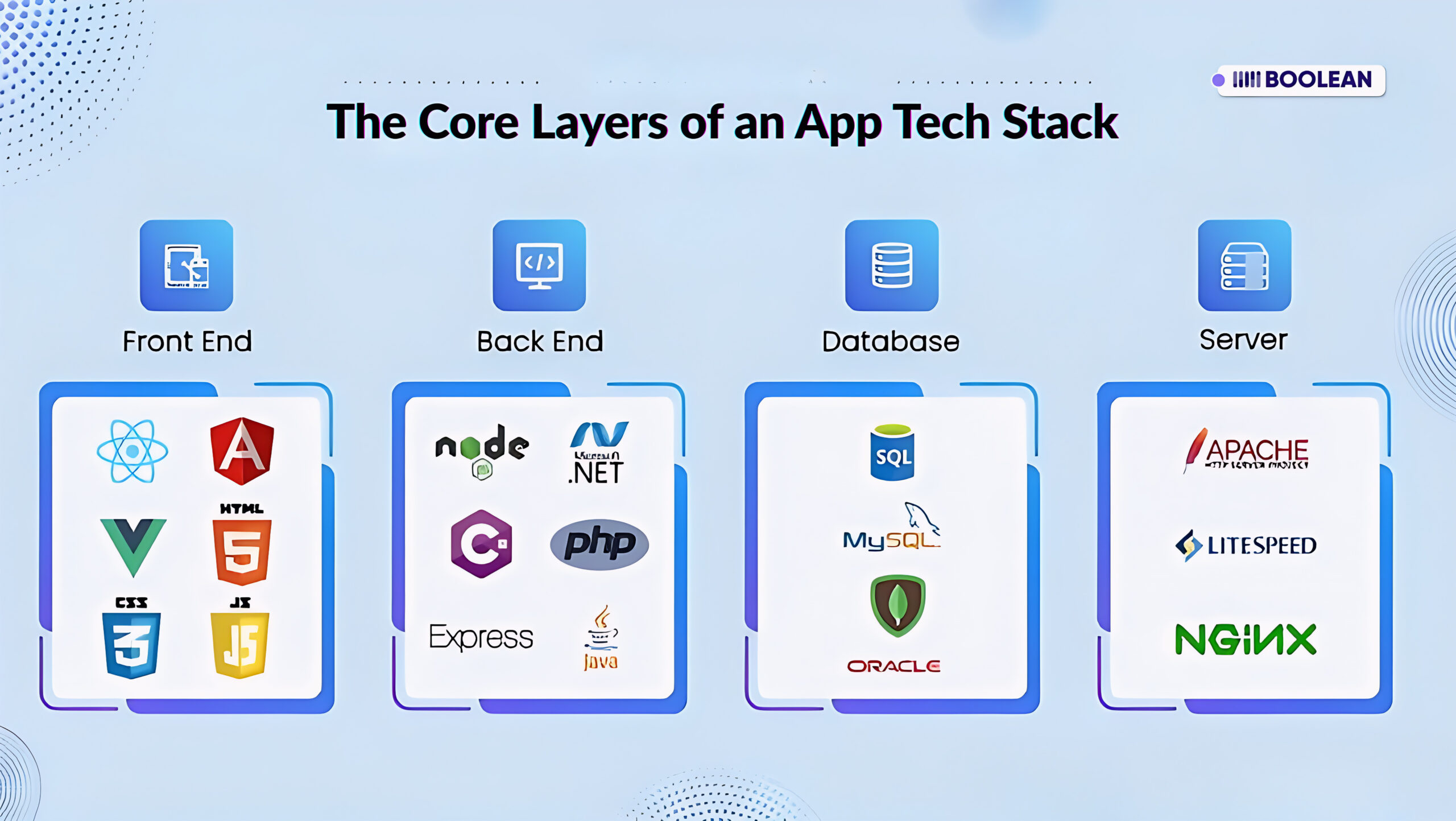
Different technologies are combined in every modern app- a machine with different parts.
Understanding these layers enables founders to choose a technology stack more wisely for their startup. It doesn’t matter if you decide to work with the top mobile app development company USA or a niche agency.
Understanding the integration of these layers will still assist you in communication and give you a better understanding of the payment.
We can understand most tech stacks by looking at the four main layers that they are composed of.
1. Frontend Layer (The Visible Part of Your App)
The frontend is whatever is visible and interactive with your users.
If a person clicks a button, scrolls through a page, or swipes left, the frontend is the one that is coordinating all these actions.
Usually, a front end technology stack will consist of:
- Markup/Programming language (HTML, CSS, JavaScript)
- A framework (React, Vue, Angular)
- UI libraries (Tailwind, Bootstrap)
What makes this stage so important is the fact that it determines the design, speed, and overall experience of your app.
Startups are known to pick frontend frameworks that speed up the app development process and provide a nice, sleek, and modern interface to the users.
This is the reason why several firms decide to hire an expert like a top react native development agency when it comes to creating cross-platform mobile apps.
2. Backend Layer (The Brain of the App)
While the frontend might be the face of your application, the backend is the brain.
Without a doubt, these are the interactions that the users can’t see the backend takes care of all of them: logins, data processing, sending emails, payment handling, and so on.
The components of a backend are, in most cases:
- The server-side language (Python, JavaScript, Java, C#, PHP)
- The backend framework (Node.js, Django, Laravel, Spring)
- APIs to connect everything
This part of your development tech decides how fast your app responds, how secure it is, and how well it handles heavy traffic.
A strong backend ensures your app is reliable and can grow without breaking.
3. Database Layer (Where All Your Data Lives)
Your app needs a safe place to store information, such as user profiles, orders, messages, and images.
This is where the database comes in.
Two main types of databases are used in most software developer tech stacks:
Relational Databases (Structured data)
Examples: MySQL, PostgreSQL
These are ideal for apps that need organized tables, such as finance apps or e-commerce.
NoSQL Databases (Flexible data)
Examples: MongoDB, Firebase
These are great for apps that need to grow fast or handle large amounts of changing data.
Good database selection prevents slow loading times and keeps user information secure.
4. Hosting & Cloud Layer (Where Your App Lives Online)
Once the app is built, it needs a home, a place where users can access it anytime.
This is handled by hosting and cloud services.
Popular hosting platforms used in many modern tech stacks include:
- Amazon Web Services (AWS)
- Google Cloud Platform
- Microsoft Azure
Cloud hosting helps startups scale faster, manage traffic spikes, and keep their apps running smoothly at all times.
It’s also essential for apps requiring AI, large storage, or heavy processing.
How These Layers Work Together
All four layers must connect and communicate smoothly.
Here’s a simple way to understand how your software engineering stack functions:
- Frontend: User taps a button
- Backend: Receives the request
- Database: Fetches the required data
- Cloud: Serves the result back to the user
A small issue in any layer can affect the entire app. This is why choosing the right technology stack is so important for startups.
Overview of Each Tech Stack Layer
| Tech Stack Layer | What It Does | Beginner-Friendly Explanation | Examples |
| Frontend | Visual interface | What users see and touch | React, Vue, Angular |
| Backend | Logic & processing | Handles actions and data flow | Node.js, Python, Java |
| Database | Stores information | Keeps user and app data safe | MySQL, MongoDB, Firebase |
| Cloud/Hosting | Runs the app online | Keeps the app available 24/7 | AWS, Google Cloud, Azure |
Why This Matters for Founders
Understanding these layers helps you:
- Make better decisions about your technology stack
- Ask the right questions when comparing proposals
- Avoid outdated or inefficient tools
- Understand how your app works behind the scenes
It also makes it easier to partner with specialists like a Flutter mobile application development company. They usually guide startups on selecting the best tech stack based on app goals, features, and budget.
Best Tech Stack Combinations for Startups in 2026
Deciding on the appropriate tools for crafting your app may seem too much to handle, particularly when there are numerous frameworks, languages, and platforms available these days.
To help you figure it all out, here are some of the best tech stack combinations for 2026 that startups can employ depending on their objectives, budget, and growth plans over the long run.
These technologies are grouped by standard startup necessities like MVP launch, scalability, mobile app development, and AI-driven projects.
The reasoning for each mix is explained in simple terms so that new founders can understand the significance.
1. Best Tech Stack for MVP (Minimum Viable Product)
In case you are coming up with the first version in a short time, it is essential to have tools that are fast, flexible, and simple to update.
A great number of startups, particularly those that are led by a top mobile app development company USA, resort to lightweight and modern stacks.
Recommended MVP Tech Stack 2026:
| Layer | Technologies | Why It’s Good |
| Frontend | React or Vue | Fast, simple, user-friendly interfaces |
| Backend | Node.js | Great for quick development |
| Database | Firebase or MongoDB | Flexible, perfect for fast iteration |
| Cloud | Google Cloud / Firebase Hosting | Affordable and beginner-friendly |
Why choose this stack?
It helps founders launch quickly, test ideas with real users, and make changes without major restructuring.
2. Best Scalable Tech Stack for Growing Startups
If, by any chance, you will have a massive user base or wish to incorporate new features later, it is advisable to use a stronger tech stack.
Recommended Scalable Startup Stack 2026:
| Layer | Technologies | Why It’s Ideal |
| Frontend | Vue.js or Angular | Stable and scalable for large apps |
| Backend | Django (Python) or Spring Boot (Java) | Highly secure and reliable |
| Database | PostgreSQL | Excellent for complex data structures |
| Cloud | AWS | Industry standard for high-growth startups |
This combination is often used by fintech, SaaS platforms, and mid-size tech companies.
3. Best Tech Stack for Mobile-First Startups
Mobile is the primary focus for over 70% of startups, which are launched nowadays, at least that’s what statistics say.
The truth is that you can go with either hybrid vs native, or cross-platform, depending on who your target is and how much money you have.
Cross-Platform Mobile Stack (Most Popular in 2026)
| Framework | Ideal For | Notes |
| React Native | Fast, modern apps | Often built with help from a top react native development agency |
| Flutter | Beautiful UI, fast performance | A favorite among many founders partnering with a Flutter mobile application development company |
| Xamarin | Enterprise apps or Microsoft ecosystem users | Built by teams like a Xamarin mobile app development company |
Typical Mobile Tech Stack:
- Frontend/Framework: React Native or Flutter
- Backend: Node.js or FastAPI
- Database: Firebase / PostgreSQL
- Hosting: AWS Amplify or Google Cloud
This is one of the most popular tech stacks for startups building mobile apps in 2026.
4. Best Tech Stack for AI-Driven Apps
AI-powered apps require stronger processing, flexible backend frameworks, and cloud tools designed for data-heavy features.
AI Application Stack
| Layer | Technologies |
| Frontend | Next.js |
| Backend | FastAPI (Python) |
| Database | PostgreSQL + Redis |
| Cloud | AWS or Google Cloud with integrated AI services |
This setup is ideal for startups building AI chatbots, recommendation systems, automation tools, or AI analytics.
5. Best Tech Stack for eCommerce Startups
Fast checkout, smooth browsing, strong security, and scalability are essential for eCommerce apps.
eCommerce Tech Stack:
| Layer | Technologies |
| Frontend | React |
| Backend | Node.js or Laravel |
| Database | PostgreSQL |
| Cloud | AWS |
Many choose this stack when working with a leading mobile app development company to handle performance and security at scale.
6. Best Tech Stack for Web Applications
If your startup is building a web platform, SaaS product, or online dashboard, you’ll need a stable web development stack.
Recommended Web App Stack:
| Layer | Technology |
| Frontend | React or Next.js |
| Backend | Node.js or Django |
| Database | MySQL or MongoDB |
| Cloud | Google Cloud / AWS |
This is a balanced stack used by thousands of modern startups and many company tech stacks around the world.
Quick Comparison: Startup Tech Stacks in 2026
| Startup Need | Best Stack |
| Fast MVP | React + Node.js + Firebase |
| High Scalability | Vue + Django + PostgreSQL + AWS |
| Mobile Apps | React Native or Flutter |
| AI Apps | Next.js + FastAPI + PostgreSQL |
| eCommerce | React + Node.js + PostgreSQL |
| Web Apps | Next.js + Node.js / Django |
How to Choose the Right Tech Stack for Your Startup (Step-by-Step Guide)
It can complicate a lot when you don’t understand but still you need to ensure that the right tools are chosen for your app.
However, the good news is that you do not have to be technically inclined in order to make a wise decision.
Using a straightforward method, it is possible for you to pick a technology stack that is compatible with your objectives, financial plan, and expansion without getting lost in the technical jargon.
There is a simple and useful guide below that helps founders, small businesses, and newbie entrepreneurs to be sure of making the right tech stack choice for their startup in 2026.
Step 1: Define Your App Type Clearly
Different apps need different tools. Start by deciding what you’re building:
- A mobile app
- A web app
- A cross-platform app (works on both Android and iOS)
- A data-heavy platform
- An AI-powered product
Each category has its own ideal software developer tech stack.
For example:
- Mobile apps often use React Native or Flutter.
- Data-centric applications are more likely to use Python and PostgreSQL.
- Web applications employ technologies such as React, Next.js, or Vue.
Consult a top mobile app development company USA If you are still confused, a consultation can help you understand the category and technical requirements of your app.
Step 2: Understand Your Budget and Timeline
Your budget plays a major role in stack selection.
Some technologies require large, experienced teams and longer development time. Others are budget-friendly and faster for MVPs.
For example:
- Node.js + React: Inexpensive to put together, fast to get it up and running.
- Java + Angular: Consistent and able to grow, but typically higher priced.
- Flutter: Speedier mobile development as it is a single codebase for both platforms.
Startups constrained by the lack of resources are inclined to opt for tools that facilitate rapid updates and a small number of staff, whereas companies in the process of expanding decide to go with more sophisticated technology stacks that are designed for scalability over the longer term.
Step 3: Think About Scalability and Future Growth
You’re not building your app just for today, you’re building it for the next 5–10 years.
Your development tech should support:
- More users
- More features
- Faster performance
- Higher traffic
For example:
- AWS or Google Cloud help scale apps smoothly.
- PostgreSQL is ideal for complex data and long-term growth.
- Frameworks like Django or Spring Boot offer strong security and stability.
Choosing future-proof tools avoids rebuilding your entire software development tech stack later.
Step 4: Check the Developer Talent Availability
Some tools are easy to hire; others are rare or expensive.
For example, React or Node.js developers are easy to find.
Meanwhile, highly specialized frameworks may cost more or slow hiring.
This is important for startup founders building long-term teams.
When working with partners like a leading mobile app development company, they typically guide you toward widely supported stacks so future hiring becomes easier, not harder.
Step 5: Look at Security Requirements
Not every app needs the same level of security.
Apps involving money, personal data, healthcare, or confidential information require a more secure software stack.
For high-security needs:
- Python (Django), Java, and .NET are reliable choices.
- PostgreSQL is great for structured, secure data.
- Cloud platforms like AWS provide built-in protection systems.
Security should never be an afterthought; it’s a core part of choosing the right tech stack.
Step 6: Check Community Support and Updates
A good technology stack should have:
- Strong documentation
- Large developer communities
- Frequent updates
- Long-term support
Why?
Because if something goes wrong, you want tools that thousands of developers understand and can help with.
Stacks such as React, Angular, Python, and Node.js are popular essentially because there is a broad ecosystem that revolves around them.
Another option for you is to look through the technology stacks of companies like Amazon, Netflix, and Airbnb to find out what equipment they use.
Step 7: Match the Stack With Your Team’s Skills
If your internal developers are already familiar with certain tools, it may be more advantageous to leverage their expertise.
By using tools that your team has experience with, you achieve:
- Faster development
- Fewer mistakes
- Smooth collaboration
- Lower budget needs
If you don’t have an in-house team yet, you can work with agencies that provide custom iPhone app development services. They can help you select the tech stack that best aligns with your vision.
How to Choose the Right Tech Stack
| Decision Factor | What to Consider | Ideal Tools/Examples |
| App Type | Web, mobile, AI, data | React, Flutter, Python |
| Budget | Low, medium, high | React + Node.js (low), Django + AWS (medium), Java + Angular (high) |
| Scalability | Future growth plans | AWS, PostgreSQL, Node.js |
| Security Needs | Data sensitivity | Django, Java, Azure |
| Hiring Talent | Developer availability | React, Node.js, Python |
| Team Skills | What your team knows | Use their strongest tech |
| Speed to Market | Fast MVP or long-term project | React + Firebase for MVP |
In Short: Choose Tools That Fit Your Startup, Not Trends
There is no single “best tech stack” that works for everyone.
The right choice depends on your goals, your users, your budget, and your future plans.
When chosen wisely, your technology stack becomes a long-term advantage.
When chosen poorly, it becomes a limitation that slows everything down.
Common Mistakes to Avoid When Choosing a Tech Stack
| Mistake | Why It’s a Problem | What to Do Instead |
| Choosing a stack just because it’s popular | Trends may not fit your app’s goals | Pick tools based on project needs, not hype |
| Ignoring scalability | App may fail as users grow | Select scalable backend + cloud solutions |
| Choosing tools your team doesn’t know | Increases time and cost | Use technologies aligned with team skills |
| Overcomplicating the software stack | Harder to maintain and expensive | Start simple, optimize later |
| Skipping security considerations | Risk of data breaches | Choose secure frameworks and cloud providers |
| Not checking developer availability | Hiring becomes difficult and costly | Select technologies with large talent pools |
| Using outdated frameworks | Poor performance + limited support | Stick to updated, well-supported technologies |
| Ignoring long-term maintenance | Future updates become expensive | Plan for 2–5 year maintenance cycle |
| Not thinking about integration needs | Hard to connect tools later | Choose stacks with good API support |
| Rushing stack selection | Wrong decisions cause rebuilds | Spend time evaluating your options |
Best Tech Stacks for Different Types of Startup Apps
| Startup Type | Recommended Tech Stack | Why This Stack Works |
| MVP / Early-Stage Startup | React + Node.js + MongoDB + Firebase | Fast to build, cost-effective, easy to scale later |
| Ecommerce Startup | React/Next.js + Node.js + PostgreSQL + Shopify APIs | High performance, secure, great for online stores |
| FinTech App | Java/Spring Boot + PostgreSQL + AWS | Strong security, stable, handles sensitive data |
| HealthTech / MedTech App | Python (Django) + PostgreSQL + Azure | HIPAA-friendly, reliable, good for data-heavy systems |
| Social Media App | React Native + Node.js + Redis + AWS | Real-time performance, scalable, supports heavy traffic |
| AI / Machine Learning Startup | Python + TensorFlow/PyTorch + FastAPI + Google Cloud | Best for AI models, fast processing, flexible |
| On-Demand Delivery App | Flutter + Node.js + Firebase + PostgreSQL | Cross-platform mobile, quick development, smooth real-time tracking |
| SaaS Platform | Vue/React + Node.js/Django + PostgreSQL + AWS | Stable, secure, ideal for subscription-based apps |
| Enterprise Software | .NET Core + SQL Server + Azure | High security, robust architecture, trusted by enterprises |
| Cross-Platform Mobile App | React Native or Flutter + Firebase/AWS | One codebase, faster launch, cost-effective |
Why Choose Boolean Inc. for Your Startup App?
Boolean Inc. is one of the top mobile app development company USA, trusted by startups to turn ideas into real, scalable, and user-friendly applications.
Their team guides founders through the entire process, from choosing the perfect tech stack to building secure, fast, and modern apps.
What sets Boolean Inc. apart:
✔ Expert mobile and web app development
✔ Cross-platform and scalable solutions
✔ MVP development to validate ideas quickly
✔ Transparent, beginner-friendly communication
✔ Long-term support for growth and updates
Ready to bring your startup idea to life? Partner with Boolean Inc. today and build your app with the right technology stack from the start.
Contact Boolean Inc. Now →
Conclusion
For any startup, software development tech stack choices are among the most crucial decisions.
Your app is going to be launched very quickly or not at all, it is going to work very efficiently or not at all, it is going to be very easy to expand later or not at all, and all these things will be determined to a great extent by the tools you decide to use today.
It is still possible for founders to make a decisive choice even if they do not have a technical background by understanding the fundamental layers of an app, having a look at the most used tech stacks for 2026, and following a simple step-by-step guide.
Working with professionals such as Boolean Inc., a leading mobile app development company in the USA, is a way of assuring that your application is constructed on a dependable, scalable, and up-to-date technology stack, thus, your startup will be positioned for sustained success.
FAQs
- What is a tech stack in software development?
A tech stack is the set of tools, programming languages, and frameworks used to build an app, including frontend, backend, database, and cloud services.
- Why is choosing the right tech stack important for startups?
The right tech stack affects app performance, development speed, scalability, security, and overall cost.
- Can I build a startup app without a technical team?
Yes! Partnering with experts like Boolean Inc., a top mobile app development company USA, helps non-technical founders build apps efficiently.
- What are the best tech stacks for mobile apps in 2026?
Popular stacks include React Native + Node.js + Firebase, Flutter + Firebase, or Xamarin + cloud services for cross-platform apps.
- How do I choose the best tech stack for my startup?
Consider your app type, budget, scalability needs, team skills, and security requirements. Start simple, plan for growth, and consult experienced developers.