
Introduction
An app can be a real growth engine. It can bring in new customers, make your service easier to use, and keep people coming back.
Still, many apps fail for a simple reason. They start with excitement and they end with confusion.
That is why you need a clear app development roadmap.
Think of it like a long trip. You can start driving with no plan and hope for the best. Or you can choose the destination, pick the best route, and know what to do if you hit traffic.
A strong roadmap keeps your team focused and it keeps your budget under control.
This guide is built for beginners. You do not need a technical background. You just need a solid plan and the right mindset.
Here is what you will learn in this complete app development guide:
- How to move from app idea to launch without wasting time
- The key parts of the app development process and what happens in each phase
- The app development lifecycle in simple terms, from first idea to long-term growth
- How to build an app that can scale as your business grows
- What an app development roadmap for startups should include, even if your team is small
If you have been searching for how to develop an app step by step, you are in the right place. We will walk through app development from idea to launch in a clear, practical way.
Start with the Right Goal and Validate the App Idea
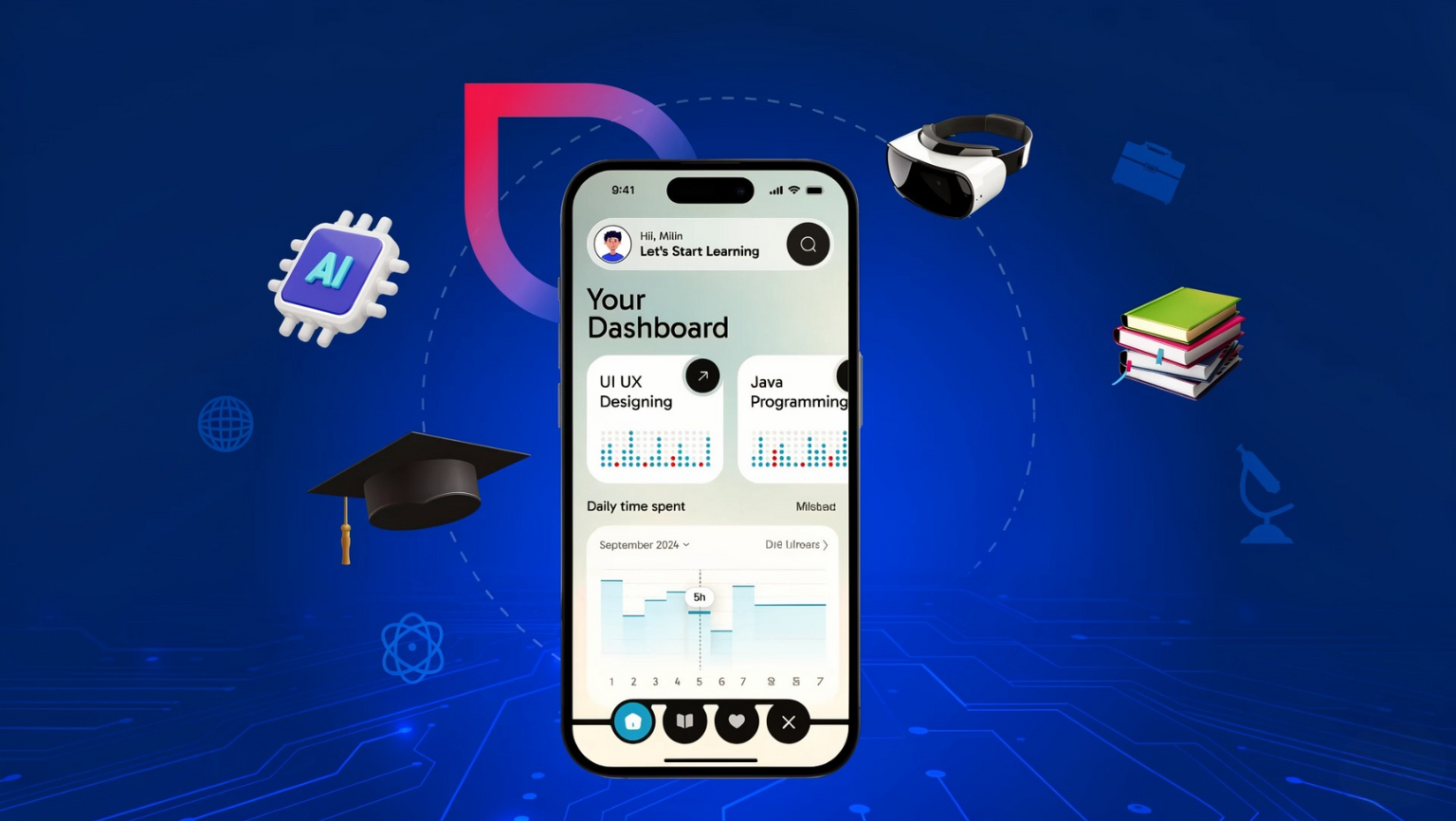
Before you build an app, validate the app idea and get clear on one thing: what business result do you want?
More sales. More repeat customers. Faster service. Lower support costs. A new subscription plan. Pick the main goal first, because it shapes every choice you make during the app development process.
1) Set one clear business goal
Ask yourself:
- What problem will the app solve for customers?
- What will the app change for the business?
- How will you measure success in 3 months and in 12 months?
Keep it simple. One main goal is better than five fuzzy goals.
2) Define your “who” and your “why”
A strong app starts with a strong audience focus.
Write this down in plain words:
- Who is it for? New customers, loyal customers, staff, partners
- Why will they care? Save time, save money, feel more in control, get results faster
This is basic app planning, but it is where most people rush.
3) Do quick app validation before you spend big
Many teams jump straight from app idea to launch. That is risky. Do app validation first so you do not build something people do not want.
Easy ways to validate:
- Talk to 10 to 20 target users and ask what frustrates them today
- Show a simple one-page description of the app and ask, “Would you use this?”
- Create a short signup page and track interest
- Run a small ad test to measure clicks and signups
Validation saves money because it guides your app development roadmap early.
4) Turn the idea into a small first version (MVP)
You do not need everything on day one. Start with MVP app development.
An MVP is the smallest version that still solves the main problem. It helps you move from app idea to launch with less risk, because you can learn fast.
Here is a simple way to decide what goes in the MVP:
| Feature type | What it means | Include in MVP? |
| Must-have | The core reason the app exists | Yes |
| Nice-to-have | Helpful, but not required | Not yet |
| Later | Advanced features for growth | Later |
This step is part of the app development lifecycle. It also sets the tone for all later app development stages.
5) What this means for your roadmap
When you validate early and focus on an MVP, your app development roadmap for startups becomes realistic. It also becomes easier to manage the full app development process without stress.
Next, we will map the milestones and timelines so your plan feels clear, not overwhelming.
Map the App Development Roadmap and Key Milestones
Once your idea is validated, you need a plan you can actually follow. Not a giant document that no one reads. A simple timeline with clear checkpoints.
This is where your app development roadmap becomes your best tool. It keeps decisions consistent, and it helps you move from app idea to launch without guessing every week.
What a roadmap really is
A roadmap is a big-picture plan that answers three questions:
- What are we building first?
- What comes next?
- When do we review progress and adjust?
A good app development roadmap for startups is flexible. Things will change. That is normal. The goal is to change with purpose, not panic.
The main app development stages to include
Most apps follow similar app development stages, even when the details differ. You can think of these stages as the backbone of the app development lifecycle.
Here is a beginner-friendly view of the common stages:
- Idea and validation
- Planning and feature list
- Design and early preview
- Build the first version
- Testing and fixes
- Launch and marketing
- Updates and long-term support
These stages are not just theory. They are the most practical way to manage the app development process from start to finish.
A simple roadmap you can copy
Use this table as a starting point. It keeps the app development roadmap clear, and it makes it easier to communicate with your team.
| Roadmap milestone | Main outcome | Why it matters |
| Validation complete | Proof people want it | Avoid wasted spend |
| MVP scope approved | Small first version defined | Keeps focus tight |
| Design preview ready | Screens users can react to | Faster feedback |
| First build ready | Working MVP | Real progress you can test |
| Testing complete | Fewer bugs and issues | Better first impression |
| Launch plan ready | Clear release and promo plan | Smooth launch day |
| Post-launch updates | Fixes and improvements | Keeps users happy |
This is a practical app development roadmap for startups. It keeps the work moving and it keeps the team aligned.
Plan for choices: platform and build approach
Early in the app development process, you will also choose how the app will be made.
Common options include:
- iOS app development for Apple users
- Android app development for Android users
- Cross-platform app development if you want one build for both
- Native apps when you want the best performance for each platform
This choice affects your budget and your schedule. It also affects your long-term mobile app strategy.
Add review points for feedback and learning
A roadmap should include moments where you stop and review:
- Are users responding well?
- Are we hitting our goal?
- What should we change before we go further?
These checkpoints are part of the app development lifecycle. They also make the full app development process feel manageable because you are not committing to everything at once.
Up next, we will plan the design in a simple way so people can “see” the app before it gets built.
Plan the App Design Process Before You Build
This is the moment where your app stops being “an idea” and starts becoming something people can picture.
A smart app design process saves time and money later, because it helps you spot confusion early. It also supports your app development roadmap, since design decisions affect what you can build first and what should wait.
If you want a simple rule, use this one: design first, build second.
Start with the user’s journey
Before colors and fonts, focus on what the user is trying to do.
Ask:
- What is the first thing a new user should do?
- What does success look like for them in 30 seconds?
- What are the 3 to 5 most important actions in the app?
This is part of good app planning. It also keeps the app development process from becoming a long list of random features.
A quick exercise that works:
- Write the top goal at the top of a page.
- Under it, list the steps a user takes to reach that goal.
- Remove any step that feels unnecessary.
Simple wins.
Wireframe first so you do not get stuck on looks
Before you worry about style, sketch the layout of each screen. This is called wireframing apps.
Wireframes are basic on purpose. They show:
- What is on each screen
- Where buttons go
- How a user moves from one screen to another
Wireframes are fast to make. They are also easy to change. That is why they belong early in the app development lifecycle.
Here are common screens many apps need:
- Welcome or sign-up
- Home screen
- Search or browse
- Details page
- Checkout or booking
- Profile and settings
- Help or support
Not every app needs all of these. Still, they are a useful starting point when you are moving from app idea to launch.
Use app prototyping to “test drive” the idea
After wireframes, you can create a clickable preview. That is app prototyping.
A prototype is powerful because beginners can understand it right away. You can show it to:
- Customers
- Business partners
- Team members
- Investors
Then ask simple questions:
- What do you think this app does?
- Where would you tap next?
- What feels confusing?
- What feels missing?
This kind of customer feedback early on is gold. It strengthens your app development roadmap for startups since you can adjust before you spend heavily.
Focus on UI/UX design for apps without overthinking it
People often hear UI/UX design for apps and assume it is complicated. It does not have to be.
Think of it like this:
- UX is how easy it is to use
- UI is what it looks like
Good UI and UX usually come from simple habits:
- Use clear button labels
- Keep screens uncluttered
- Make text easy to read
- Use the same layout patterns across the app
- Keep key actions obvious
If users need a tutorial to do basic things, something is off.
Decide what “good enough” looks like for the MVP
Remember your MVP? Design should match it.
When teams design too much too soon, they delay the whole app development process. They also stretch the app development stages longer than needed.
A clean MVP design should include:
- Core screens only
- Basic branding
- Simple onboarding
- Clear error messages
- Easy navigation
You can polish later. First, get real users using it.
Make sure design supports your mobile app strategy
Design is not just about looks. It affects growth.
For example:
- A smooth sign-up improves user acquisition
- Clear pricing screens help app monetization
- Easy sharing supports your app marketing strategy
- Simple flows reduce support requests
This is why design belongs in your app development roadmap. It connects the product to business growth.
A quick checklist before you move to building
Before you start the next app development stages, confirm these basics:
- Wireframes cover the key screens
- A prototype has been reviewed by real users
- The MVP feature list is still realistic
- The app flow feels simple and predictable
- Feedback has been collected and noted
Once you have this, you are ready to start building in smart steps, beginning with the MVP and growing from there.
Build in Stages: From MVP to Full Product
Now the real work begins. You are ready to build an app, but the best way to do it is not “all at once.” The best way is in steps, with clear goals for each step.
This staged approach keeps your budget safer. It also reduces surprises. It is a key part of a healthy app development roadmap and a strong app development roadmap for startups.
Why building in stages works
When you build step by step, you can:
- Launch faster
- Learn from real users
- Fix problems early
- Add features with confidence
This is the heart of the app development lifecycle. It also makes the full app development process feel less overwhelming.
Stage 1: MVP app development (your first real release)
MVP app development is not about cutting corners. It is about focus.
Your MVP should do one main job really well. That job should match the problem you validated earlier. This is the fastest path from app idea to launch.
Examples of strong MVP goals:
- A booking app that lets users book in under a minute
- A shopping app that makes reordering simple
- A service app that helps customers track requests
Keep it tight. Your MVP is one of the most important app development stages.
Stage 2: Choose how you want to build it
During this part of the app development process, you will decide what kind of build fits your needs.
Common choices:
- iOS app development if your customers mostly use iPhones
- Android app development if your audience is mainly Android users
- cross-platform app development if you want to reach both with one plan
- native apps if you want the best experience on each platform
Your choice should match your users, your budget, and your long-term mobile app strategy.
If you are unsure, start with where your customers already are. That is usually the smartest move for an app development roadmap for startups.
Stage 3: Build the core features first
Do not start with fancy extras. Start with the core flow a user needs to finish the main task.
A simple way to organize features:
Core (MVP)
- Sign up or sign in
- Main action (book, buy, order, track, message)
- Payment or confirmation if needed
- Basic profile and settings
Next (post-launch updates)
- Referrals or sharing
- Loyalty rewards
- Advanced filters
- Personalization
This keeps your app development roadmap clean, and it prevents the app development stages from becoming messy.
Stage 4: Keep the process flexible and steady
Many teams use agile app development. In simple terms, it means you work in small cycles, review progress often, then improve as you go.
It helps because:
- You see progress sooner
- You can change priorities without starting over
- Feedback can be added during the build, not months later
This makes the app development lifecycle smoother, especially when you are moving from app idea to launch and learning along the way.
Stage 5: Track decisions and protect your roadmap
As you build, new ideas will pop up. Some will be great. Some will be distractions.
Use a simple rule:
- If it is not needed for the MVP goal, save it for later.
That rule protects your app development roadmap and keeps the app development process from dragging on.
A helpful habit is to keep a “Later List” that includes:
- Feature idea
- Why it matters
- When to revisit it
This is a small thing. It makes a big difference.
Stage 6: Prepare for life after the MVP
Your MVP is not the finish line. It is the start of real learning.
Once people begin using the app, you will gather:
- Customer feedback
- Usage patterns
- Common complaints
- Feature requests
That is how you shape the next app development stages in the app development lifecycle.
You are now ready for the next step, which is testing, launching, and getting the app into the stores without stress.
Test, Launch, and Get Through App Store Submission Smoothly
Launch day feels exciting. It also feels a little scary. That is normal.
The truth is simple. A smooth launch is rarely about luck. It comes from careful app testing, solid QA testing, and a clear plan for app deployment and app store submission.
These are key app development stages in the app development lifecycle, and they protect all the work you have already done in the app development process.
Test like a real user, not like a builder
When you know an app inside out, you tap faster and you miss problems. New users do not.
Good app testing focuses on real-life moments, such as:
- Signing up for the first time
- Resetting a password
- Making a payment
- Getting a confirmation message
- Using the app on slow internet
- Switching between Wi‑Fi and mobile data
This is not “extra work.” It is how you avoid one-star reviews on day one.
What QA testing really means
QA testing is simply checking that the app works the way it should, again and again, until the most common issues are gone.
A simple QA checklist you can use:
- The most important buttons work every time
- The app does not crash during normal use
- Text is readable on small screens
- The app looks fine on different phone sizes
- Forms accept the right info and reject the wrong info
- Notifications work if you use them
- Payments succeed and failures show clear messages
If you are doing iOS app development and Android app development, test both. They behave differently in small ways, and those small ways can create big headaches.
Do a “soft launch” before the big launch
A soft launch means you release the app to a small group first. It is one of the smartest steps in any app development roadmap.
You can soft launch to:
- A small group of customers
- Staff members
- A limited location
- Invited testers only
Why it helps:
- You catch issues early
- You learn what users do, not what you expected
- You collect quick customer feedback before the wider public sees the app
For an app development roadmap for startups, this is a lifesaver. It reduces risk while you are still learning.
Plan your app launch strategy like a simple checklist
A good app launch strategy is not about doing everything. It is about doing the right things on time.
Here is a clear launch checklist:
- Final app name and description
- App screenshots that show the main benefit
- A short preview video if possible
- Privacy policy and support contact details
- Pricing plan if you have one
- A simple “welcome” message inside the app
- A plan for how users can report problems
This part connects your app idea to launch work with the reality of public release.
App deployment and app store submission: what to expect
App deployment means preparing the app so people can download it.
App store submission means sending the app to the store for review. Each store has rules. Sometimes approval is quick. Sometimes it takes longer.
To avoid delays:
- Make sure your app description matches what the app actually does
- Avoid confusing claims
- Double-check age ratings and privacy details
- Test sign-up and login flows, because reviewers try them
This stage is a common speed bump in the app development process, so plan time for it in your app development roadmap.
Launch day habits that keep things calm
On launch day, do not disappear. Stay alert.
Do these instead:
- Watch reviews and support messages closely
- Fix urgent issues fast
- Reply politely and clearly
- Keep notes on repeated complaints
This is where the app development lifecycle becomes real. It is also where your next app development stages begin, because launch is not the end.
Next, we will talk about growth after launch, including marketing, analytics, and keeping the app ready for more users.
Grow After Launch: Marketing, Analytics, and Scalability
Your app is live. Now the real question shows up.
How do you get steady downloads and steady use?
Growth is not one big trick. It is a set of small moves that stack up over time. This is where your mobile app strategy matters, because growth affects your budget, your team, and the future of your app development roadmap.
Start with an app marketing strategy that fits your audience
A strong app marketing strategy starts with one clear message.
- What is the main benefit?
- Who is it for?
- Why should someone care today?
Then pick a few channels you can actually manage. Too many channels creates noise.
Beginner-friendly marketing channels:
- Email your existing customers
- Post simple demos on social media
- Partner with a business that shares your audience
- Ask happy users to leave honest reviews
- Use simple search ads if you have budget
Marketing should support user acquisition, but it should also attract the right users. Lots of downloads mean nothing if no one stays.
Improve user acquisition with a better first experience
People decide fast. If the first minute feels confusing, they leave.
To improve user acquisition, focus on:
- Fast sign-up
- A clear first screen
- A simple “next step”
- Helpful tips that appear only when needed
This is also why the earlier app development stages matter so much. If the basics are weak, growth becomes expensive.
Use app analytics to learn what is really happening
You do not need to guess. You can measure.
App analytics helps you answer questions like:
- Where do people drop off?
- Which feature is used most?
- What brings users back?
- Which marketing channel works best?
Track a few simple numbers at first:
- New downloads per day
- Sign-ups completed
- Users who come back after 7 days
- Purchases or bookings if you sell something
- Top screens people visit
This data turns the app development process into a loop of learning. It also shapes the next version of your app development roadmap for startups.
Turn customer feedback into your next update plan
People will tell you what they want. They will also tell you what is broken.
Collect customer feedback from:
- Reviews in the app store
- Support tickets
- Short in-app surveys
- Quick calls with power users
Then group feedback into buckets:
- Bugs and confusion
- Missing features
- Performance complaints
- Pricing questions
This keeps your next app development stages organized and it protects your app development lifecycle from chaos.
Think about app monetization early, even if you launch free
If the app supports business growth, it still needs a money plan.
Common app monetization options:
- Subscription
- One-time purchase
- Freemium with paid upgrades
- In-app purchases
- Ads, if it fits the experience
Pick the model that feels fair to users. Then make the pricing easy to understand. Confusing pricing kills trust.
Plan for app scalability without overbuilding
App scalability means the app can handle more users without falling apart.
You do not need to build for a million users on day one. Still, you should plan for growth so you do not get stuck later.
Signs you need to focus on scalability:
- The app slows down during busy hours
- Pages take too long to load
- Users report crashes after updates
- Support requests increase fast
Add scalability goals into your app development roadmap as your user base grows. This is a natural part of the app development lifecycle.
Do not ignore app maintenance
Here is the quiet truth. Apps need care.
App maintenance includes:
- Fixing bugs
- Keeping up with store rules
- Updating for new phone versions
- Improving speed and stability
- Closing security gaps
Maintenance is not glamorous. It is how you protect your brand and your ratings. It also keeps your app idea to launch success from turning into a slow decline.
Keep app growth on a simple rhythm
The teams that win long-term use a steady rhythm:
- Launch
- Measure
- Listen
- Improve
- Repeat
That rhythm is the real app development process after launch. It is also what makes a long-term app development roadmap useful for business growth.
How Boolean Inc. Can Help You Move Faster
If you want guidance without the stress, a partner like Boolean Inc. can help you go from app idea to launch with a clear plan and steady progress.
Here is what teams usually look for when choosing a top mobile app development company USA:
- Help shaping the app development roadmap around real business goals
- A simple, step-by-step app development process that stays on track
- Support across the full app development lifecycle, from MVP to updates
- Clear communication during all app development stages so you always know what is next
Boolean Inc. works in a practical way. You share your goals, your timeline, and your budget. Then you get a plan that is easy to follow.
If you are comparing options, it is worth speaking with a top mobile app development company in the USA that understands growth, not just launching. Boolean Inc. is also seen by many as a top mobile app development company USA for businesses that want long-term results.
Partner with Boolean Inc. when you want clarity, speed, and ongoing support.
Conclusion
Business growth does not come from simply trying to build an app. It comes from following a clear app development roadmap that turns your plan into action.
Use a simple rhythm: validate, build a focused MVP, test well, launch with purpose, then improve with real customer feedback. This is the smartest way to manage the app development process and the full app development lifecycle through all key app development stages.
If you keep updating your roadmap as you learn, your app can keep growing right alongside your business.
FAQs
- How long does it take to go from app idea to launch?
It depends on the features, but many teams aim for 8 to 16 weeks for a simple MVP.
- What is the difference between an app development roadmap and a to-do list?
An app development roadmap shows the big milestones and priorities over time. A to-do list is daily tasks.
- Do I need iOS app development and Android app development at the same time?
Not always. Start where your customers are, then expand when you have proof the app is working.
- What happens after the app is live?
You focus on app maintenance, updates, support, and improving based on customer feedback and app analytics.
- What is the safest way to start if I am a startup?
Use an MVP-first plan and a clear app development roadmap for startups so you can learn fast without overspending.